
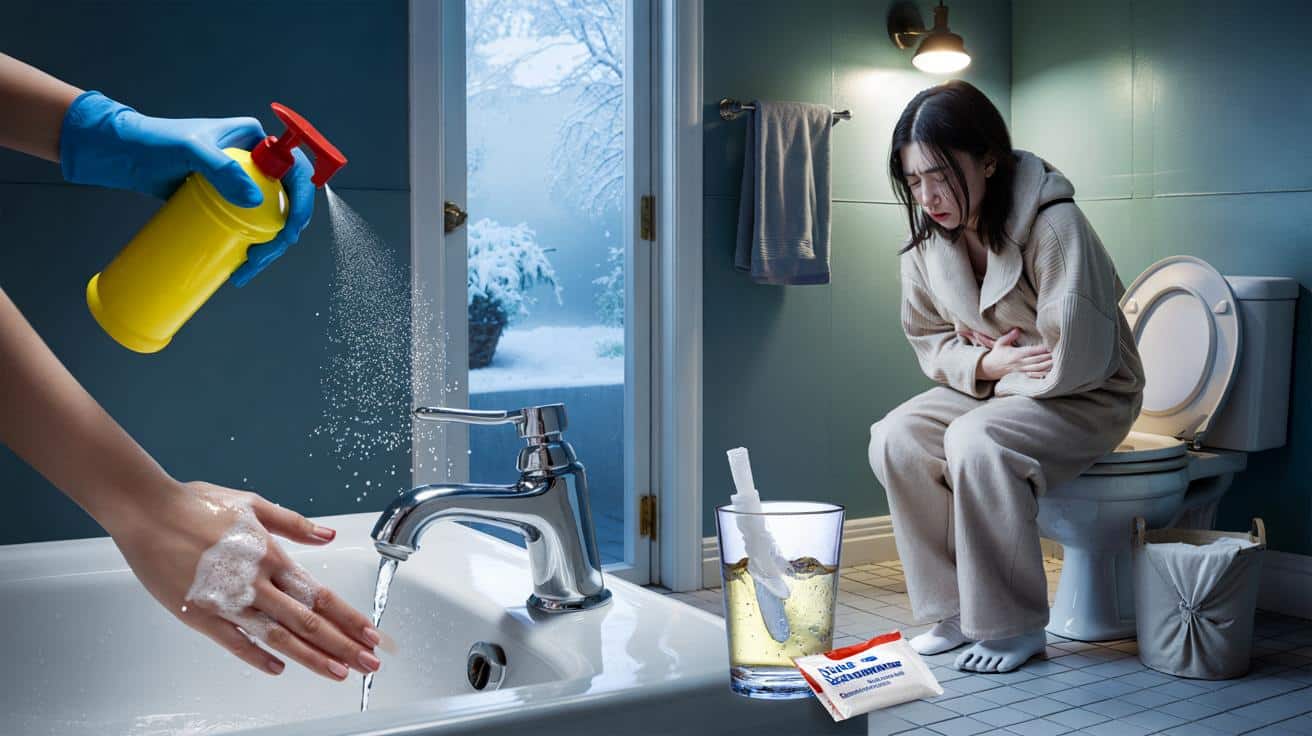
Yet the bug filling A&E waiting rooms right now doesn’t just target noses. It goes straight for the gut, sweeps through households in a weekend, and leaves you rinsing the bathroom with bleach at 3am. If you’ve felt floored within hours by nausea, vomiting and an upset stomach, you might be looking at norovirus territory rather than a mild seasonal chill. Three warning signs stand out this year, and they don’t look like a cold at all.
The office kettle clicked off and on, off and on, like a metronome for January fatigue. James had said he was “a bit coldy” and grabbed tissues, then by lunchtime his face had drained to grey and he’d bolted for the loo, twice. By the evening, the WhatsApp lit up with the sort of messages you don’t read over dinner: “Can’t stop being sick. Can someone feed the cat?” In the morning, two more colleagues had “the same cold”. Only it wasn’t a cold. It moved too fast. Hours, not days. You could almost hear it move down the street.
The winter bug that doesn’t feel like a cold
Norovirus has a way of gate‑crashing the season and borrowing the language of sniffles, which is why so many of us shrug it off as “winter lurgy” until we’re hunched over a basin. The three symptoms that change the conversation are these: sudden, explosive vomiting that arrives with little warning, relentless watery diarrhoea that can strike every 15–30 minutes at its peak, and the creeping signs of dehydration like dizziness, a dry mouth and very dark wee. A common cold builds slowly and lives in your head and chest; this one attacks the gut, hard. It doesn’t whisper. It bangs on the door.
Picture a single classroom on a wet Tuesday, one child pale and quiet in the corner. By Friday, five are off, and a teacher is phoning parents in that careful voice we all recognise. UK surveillance usually charts a winter rise in norovirus each year, with waves diverging by region and peaking between late autumn and early spring, and small clusters often lighting the match. It’s rarely headline‑loud until your household is the one with towels on the floor and a laundry mountain that smells of disinfectant. *Yes, it can hit that fast.*
Here’s why the confusion happens. Colds come from respiratory viruses and bring sore throats, blocked noses, low fevers and that heavy‑eyed, tea‑seeking vibe. Norovirus infects the gut, incubates in roughly 12–48 hours, and then erupts with nausea, vomiting and diarrhoea that tend to arrive abruptly and together. It spreads with ruthless efficiency: a few viral particles on a door handle, microscopic droplets after a bout of vomiting, an unwashed hand passing a sandwich. Alcohol gels struggle with it, and it can linger on surfaces like taps or phones for days. Different playbook, different rules.
What to do in the first 24–48 hours
Start with fluids, not food. Small sips every few minutes beat gulps that bounce back; use water, oral rehydration salts, weak squash or ice chips if your stomach protests, and aim for clear urine by tomorrow. Once things settle, try light foods such as toast, rice or bananas, and remember dairy, alcohol and very fatty meals are not your friends right now. Paracetamol can help with aches or a fever, taken as directed, though anti‑diarrhoeal medicine isn’t suitable for children and isn’t wise if you have blood in stool or high fever. If you’re pregnant, very elderly, managing diabetes or kidney problems, speak to a clinician early. Quiet care now saves drama later.
Contain the spread like you would a glitter explosion. Soap and warm water for hands after the loo and before food, 20 seconds that actually feel long, and bleach‑based cleaning on taps, flush buttons, handles and phones. Keep one bathroom for the ill person if you can, bag soiled clothes and wash hot, and stay home for 48 hours after symptoms stop, especially if you handle food or care for others. We’ve all had that moment where a quick rinse feels “good enough” at 2am, but that’s when this virus wins. Let’s be honest: nobody really does that every day. This is the week to try.
“If it’s sudden, violent, and wakes you in the night, think norovirus, not a cold. Act fast on fluids and hygiene, and protect the people around you.”
- Call NHS 111 if you can’t keep fluids down for 8 hours, you feel faint when standing, there’s blood in stool, or symptoms last beyond 3 days.
- Babies under 12 months, adults over 65, and people with long‑term conditions need earlier advice. Don’t wait if you’re worried.
- Clean sick spills with disposable gloves and a bleach solution; wash your hands with soap after removing gloves.
- Use separate towels, keep toothbrushes apart, and avoid preparing food for others until 48 hours after symptoms finish.
- Avoid visiting hospitals or care homes until you’re fully clear; it matters more than you think.
Stay alert, not anxious
Viruses shift, we adjust, and life keeps going with a little extra care and a couple more hand‑washes than we planned. The goal isn’t panic, it’s pattern‑spotting: when a “cold” arrives in the gut, when vomiting is sudden and fierce, when diarrhoea refuses to ease, that’s your cue to switch playbooks and protect your circle. Chat to your child’s school if they’re off, message the group chat so people pause home visits, and share what helped you get through the night. The story you tell could spare someone else a rough weekend. On a cold morning, that’s a small kindness that travels far.
| Key point | Detail | Interest for the reader |
|---|---|---|
| The “cold” that isn’t | Norovirus hits the gut with sudden vomiting, watery diarrhoea, and dehydration signs, not a slow, sneezy head cold. | Helps you read your body fast and act before the whole house gets ill. |
| First 24–48 hours | Prioritise fluids in tiny sips, rest, light foods later; use paracetamol for aches; avoid anti‑diarrhoeals for kids. | Reduces risk of dehydration and shortens the roughest phase. |
| Hygiene that works | Soap and water beats gel for hands; bleach on high‑touch surfaces; home isolation for 48 hours after symptoms end. | Stops that “everyone’s got it now” chain reaction at home, work and school. |
FAQ :
- Is there a “new 2026 norovirus strain” I should worry about?Norovirus evolves over time and different variants drive seasonal waves, which labs track every winter. The practical advice stays the same: recognise gut‑led symptoms early, hydrate, and use soap‑and‑bleach hygiene to cut spread.
- How long am I contagious?People are most infectious while they have symptoms and for 48 hours after they stop. Some shedding can continue longer, so food handlers and carers should be extra cautious and follow workplace guidance.
- Do hand sanitisers work against norovirus?Alcohol gels have limited effect on norovirus. Wash hands with soap and warm water for around 20 seconds, dry them well, and use gel only as an extra step, not a replacement.
- When should I seek medical help?Call NHS 111 urgently if you can’t keep fluids down, feel very weak or dizzy, have blood in stool, severe tummy pain, a high fever that won’t settle, or symptoms lasting beyond three days. Babies, older adults and people with long‑term conditions need earlier advice.
- What should I eat or drink while unwell?Start with small sips of water or oral rehydration solution, then add bland foods like toast, rice or bananas once vomiting eases. Avoid alcohol, very fatty foods and dairy for a bit. Rest, fluids, and patience are your allies.



So it’s the “not-a-cold” cold. Great. Guess I’ll be bleaching my phone… again.
Thanks for the clear breakdown on the three red flags—explosive vomiting, relentless watery diarrhoea, and dehydration. The 48‑hour stay‑home rule is a helpful reminder.