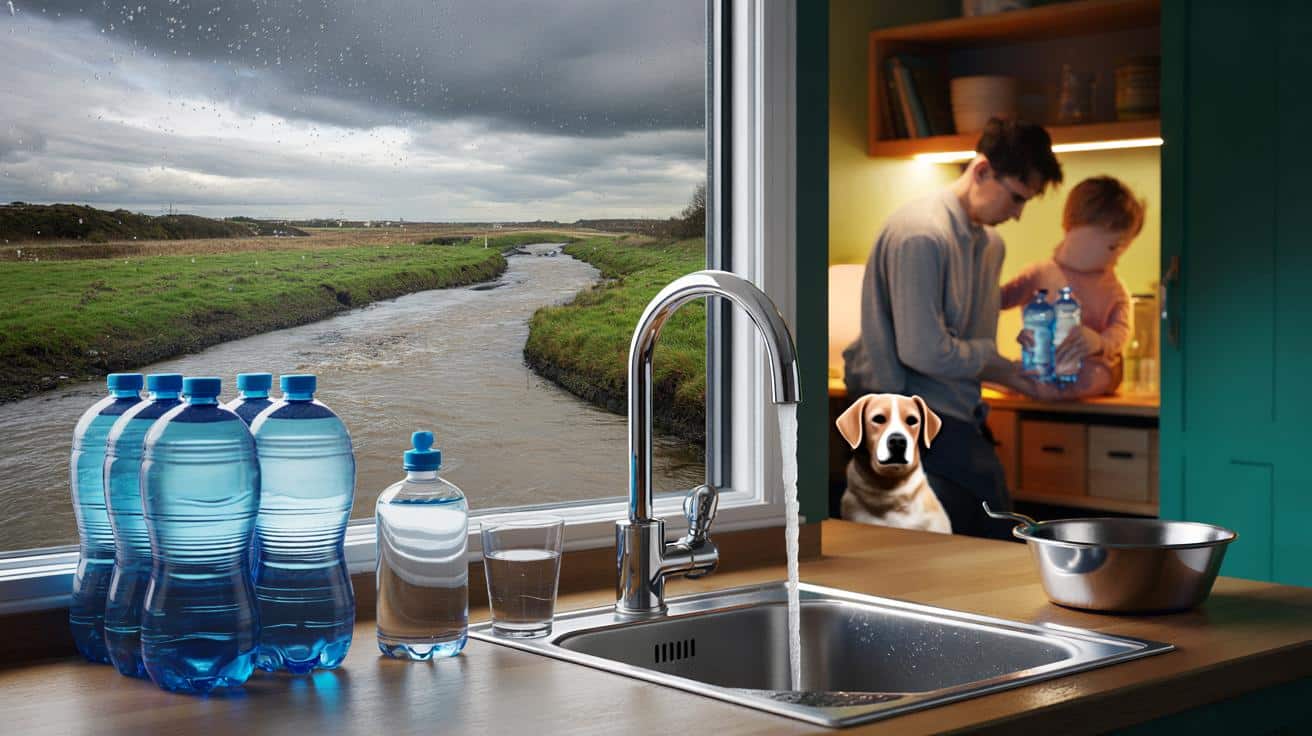
A “river water” alert has landed in letterboxes and WhatsApp groups — tens of thousands told to pick up bottled water from Monday, no panic, just preparation. The message is blunt. The questions aren’t.
A ping on the neighbourhood chat, then the official text: “Precautionary ‘river water’ notice. Stock bottled water from Monday.” Someone posted a picture of empty shelves from the last big run, like a weather warning had blown through the aisle.
Next door, a dad counted heads and did the maths out loud. Two kids, one elderly mum, and a labrador who drinks like a marathon runner. He muttered something about three days, then reached for the car keys. The tap still ran clear. That somehow made everyone more jumpy.
The river is coming to the tap.
What a ‘river water’ warning really means
On the surface, it sounds simple: the utility expects to lean on river-fed supplies, or it’s worried about what the river has just dumped into the system. The phrase sets teeth on edge. It hints at mud, farm run-off, sewer spills after a storm, and the things you can’t see but imagine anyway.
These notices aren’t clickbait. They’re a legal signal that normal treatment may be stressed, maintenance is due, or quality could dip while works happen. Think of it like a seatbelt warning light. The car still moves. The risk profile has changed.
There’s a recent memory that makes people twitch. In Brixham in 2024, a parasite called cryptosporidium slipped past the defences and thousands had to boil water for weeks. No one forgets the taste of panic. Those headlines linger longer than safe days do. Not because taps fail often, but because when they do, it’s personal.
In most cases, Monday isn’t random. It’s the start of planned works at a treatment plant, or the day crews switch intakes after heavy rain. Water companies time these advisories to align with staffing, deliveries, and tanker support. They want shops stocked and call centres awake.
A river can turn in hours after a downpour. Turbidity spikes, algae bloom, the chemistry shifts. Filtration has limits in the moment. Utilities prefer a cushion, not a cliff. That’s why they nudge you to set aside bottles. It’s less about fear, more about margin.
There’s also the taste-and-odour problem that isn’t dangerous but unsettles people. Chlorine doses get tweaked to keep the microbiology in check, and your tea suddenly smells like a lido. A small thing becomes big when it’s in your mug.
How to prepare without panic
Start with a number. Aim for 2–3 litres per person per day for drinking and basic food prep, for three days. That’s your baseline. Pets need a share too — a medium dog drinks roughly a litre to a litre and a half a day.
Buy what you’ll actually use. Plain still water, in sizes you can lift easily. Rotate it into normal life so nothing goes stale at the back of a cupboard. If money’s tight, split the shop: a couple of multipacks now, a couple tomorrow. *This isn’t about hoarding. It’s about a calm buffer.*
Fill the gaps at home on Sunday night. Clean jugs and lidded pans make decent short-term reserves for cooking. Ice trays in the freezer do double duty — they chill, and they’re water. If told to boil, bring tap water to a rolling boil for one minute, cool it in a clean container, then cover. Let the kettle be your quiet workhorse.
The biggest mistakes are predictable. People buy far too much sparkling water they can’t cook with. They forget baby formula needs boiled, cooled water measured by the instructions, not by guesswork. They leave the elderly relative out of the headcount, then scramble on day two.
Shops don’t love a rush, and nor do the staff who have to face it. We’ve all had that moment when the aisle feels like a snow day is coming and you’re the last one to the milk. Put two packs in your trolley, not ten. Your neighbour might be counting heads too.
Let’s be honest: nobody actually does that every day.
Trust the official channels, not screenshots with angry red arrows. Your water company website, its verified social media, and local council pages will carry the specific advice: “Do Not Drink,” “Boil Water,” or simple “Taste/Aesthetic” guidance. Each means something different for tea, teeth-brushing, and dishwashing.
Think of Monday as a rehearsal for the next storm, not the end of the world. Keep medication that needs clean water in mind. Check on the person across the landing who doesn’t drive. **Preparedness belongs to a street, not just a household.**
“The safest household is the one that turns a warning into time,” says a senior water safety manager who’s shepherded more than one town through a boil notice. “Bottled water is a bridge. It lets the engineers do their job.”
- Baseline: 2–3 litres per person per day for three days.
- Still water for cooking; sparkling is fine for drinking if you like it.
- Pets count. Babies need cooled boiled water for formula if advised.
- Boil guidance: rolling boil, one minute, covered to cool.
- Follow your water company’s exact instruction on what’s safe for brushing teeth and washing veg.
Why this story is bigger than one warning
The river has always been a partner we barely notice. Drought one month, deluge the next, and Victorian pipes humming beneath it all. Climate swings faster now. Infrastructure ages. Population grows. The room for error narrows.
None of that is a doom loop if you see it early. Engineers are already rebuilding treatment steps to handle murkier flows, installing extra UV disinfection, and adding storage that buys time when the river turns wild. Community teams are mapping who needs doorstep deliveries on day one, not day three.
What changes fastest is confidence. When messages are clear and the shelves aren’t stripped, the next alert lands softer. **People remember what worked — the quick shop, the boiled kettle, the knock on the neighbour’s door — and repeat it.** The river keeps flowing, the system keeps catching up, and a temporary tweak to your routine stays just that: temporary.
It can feel strange to plan for water in a country where the sky is often doing the job for free. That feeling is the point. Preparation is a small act, done quietly, that turns shaky into steady. The tap runs. You choose when to trust it. And when to buy yourself a little time.
| Key point | Detail | Interest for the reader |
|---|---|---|
| What a ‘river water’ warning means | Precaution during stressed treatment, planned works, or post-storm conditions | Decodes the scary phrase so you know how to react |
| How much water to store | 2–3 litres per person per day for three days, include pets | Gives a clear, doable target for shopping |
| Boil vs do-not-drink | “Boil” makes water safe for drinking; “Do Not Drink” needs bottled only | Prevents risky guesswork in the kitchen and with kids’ bottles |
FAQ :
- What exactly is “river water” in this warning?It’s shorthand for supplies influenced by a river intake, either temporarily increased or under stress after heavy rain or maintenance. The warning flags a higher chance of taste issues or microbiological risk.
- Do I need to boil water if told to stockpile bottled?Follow the specific notice. A “Boil Water” advisory means you can use tap water once boiled. A “Do Not Drink” notice means use bottled for drinking, food prep, and brushing teeth.
- How long should I expect the disruption to last?Most advisories run from a day to several days. Utilities aim short and cautious. Updates land via text, email, and their website dashboards.
- Can I use tap water for showers and washing up?During a “Boil Water” notice, bathing and handwashing are generally fine, avoiding swallowing. For washing up, many people boil rinse water or use the dishwasher on a hot cycle if guidance allows.
- What about babies, elderly relatives, or immunocompromised people?Be extra careful. Use boiled, cooled water or bottled for formula and drinking. Check official guidance and, if needed, your clinician’s advice for vulnerable family members.