
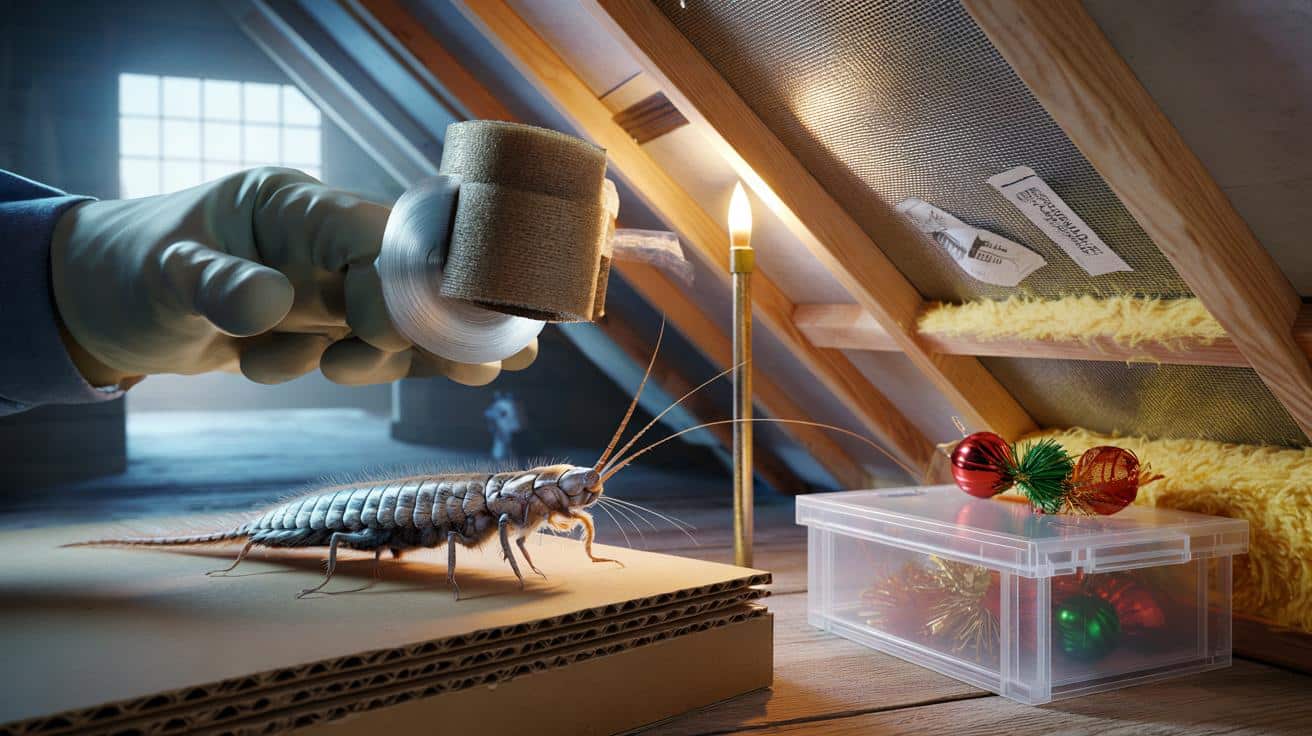
A new wave of attic-dwelling insects is slipping through eaves and pipe gaps, turning boxes of Christmas decorations into nesting ground. It’s not about panic; it’s about tightening the envelope of the home, one quiet draught at a time.
The morning the cold came biting back, I watched a neighbour in a fleece and socks climb a wobbly loft ladder, torch between teeth, breath clouding in that thin winter air. He tapped the chipboard floor, nudged a shoebox, and something grey flickered between insulation and joist like a skitter of quicksilver. Later, at the corner shop, talk drifted from energy bills to “those things in the attic” and a photo pinged round the street WhatsApp: a slim, fish-shaped insect with three tail filaments and a habit of moving like a whisper. By dusk, a pest van idled near the cul-de-sac as the driver peered up at the roofline. Everyone kept mentioning the same phrase, half joking, half not. The invasion isn’t loud.
What’s crawling into British lofts this winter
Callouts are rising for the **long-tailed silverfish** (Ctenolepisma longicaudata), a stealthy, paper-loving insect that thrives in the dry calm of British lofts. It’s bigger and tougher than the common bathroom silverfish, can survive cooler temperatures, and will happily nibble starchy glues on cardboard, book bindings, old wallpaper and loft-liner backing. They arrive with our stuff: tucked in parcels, clinging to second-hand furniture, hitching along the warm pipe runs that pierce the ceiling into the attic.
In Leeds, a couple found them first on a folded box of children’s drawings, then behind a stack of holiday suitcases. A pest technician in Bristol told me weekend callouts have doubled on the back of the cold snap, with most sightings within a metre of the loft hatch or along the eaves where a sliver of daylight sneaks through. People think they’re seeing “little fish”, until they clock the long tail threads and the way they dart and freeze.
January is prime because our heating creates gentle currents that pull bugs towards warmer edges, yet lofts sit cool, stable and undisturbed — perfect for a slow-burn infestation. Long-tailed silverfish take their time, laying eggs in cracks, feeding in the dark, and spreading through ceiling voids and boxed-in runs. The damage is subtle: frayed edges on stored fabrics, flecks on photos, and irregular grazes on packaging and books.
How to ‘Seal the Loft’ without panic
Start with light and air. On a bright day, switch off loft lights and look for hairline rays at the soffits, the hatch, and around pipes or cables — that’s where you focus your “sealing”. Fit closed-cell foam tape around the loft hatch, add a brush strip on the ladder door, and bead flexible sealant where pipes punch through plasterboard. For vents, keep the airflow but add fine insect mesh (about 1 mm) behind the grille so the loft still breathes while the bugs don’t.
Box clever. Move cardboard into lidded plastic crates with snap seals, slip precious papers into zip sleeves, and lift items off the insulation so you can see and clean. Skip foggers and blanket sprays; use sticky monitors to learn where they run, then deploy targeted gel baits if needed. Let’s be honest: nobody really does that every day. So do a one-hour blitz now, then a quick monthly glance.
You’ll make the biggest difference with a handful of precise actions and a calm pace. *Yes, up there.* You’re not trying to suffocate the loft, you’re trying to redirect traffic and remove the buffet.
“Seal, don’t smother. Lofts need to breathe, homes need to shed moisture, and pests hate clean lines and tight edges,” says Claire Mason, a Yorkshire-based entomology adviser. “Think draught-proofing with benefits.”
- Don’t block vents. Cover with fine mesh instead.
- Switch cardboard to sealed plastic; label, date, stack light.
- Fit foam tape to the hatch; check it twice a year.
- Seal 2–5 mm gaps around pipes and cables with flexible caulk.
- Deploy sticky monitors near the hatch and along eaves to track trends.
What this pest wave means — and what comes next
There’s a quiet lesson in this winter rush. Our homes are little ecosystems now, knitted to global deliveries, fast-moving weather, and older rooflines that were never designed to be bug-tight. We’ve all had that moment where the attic light clicks on and a small, ancient creature reminds us that the house we love is also a shelter for other lives. Sharing notes with neighbours, tuning the building to breathe well, and trimming the easy entry points — it’s all part of making a place resilient without turning it into a plastic box. The January sweep of long-tailed silverfish will ebb as temperatures shift and routines return, yet the habits we build — better storage, cleaner edges, quicker fixes, a little mesh where it matters — are the sort that pay back in warmth, calm, and fewer unwelcome flickers in the torch beam. Tell a friend what you learned today. It travels.
| Key point | Detail | Interest for the reader |
|---|---|---|
| Spot the right culprit | Long-tailed silverfish have three tail filaments, move in quick bursts, and favour dry lofts over damp bathrooms. | Targets the fix and avoids wasted money on the wrong treatment. |
| Seal the Loft, keep the air | Foam tape the hatch, caulk pipe penetrations, fit 1 mm mesh to vents, tidy cable holes without closing vents. | Warmer home, lower bills, fewer pests — without condensation headaches. |
| Store smart, not hard | Swap cardboard for sealed plastic, elevate boxes, use sticky monitors to track activity lines. | Removes the food and hiding spots, shows progress at a glance. |
FAQ :
- What exactly is the “new” pest turning up in lofts?Primarily the long-tailed silverfish (Ctenolepisma longicaudata), an indoor-adapted insect that feeds on starchy glues, papers, and fabrics and copes well with cool, dry spaces.
- Is it dangerous to people or pets?No bites, no stings. The risk is to belongings and, rarely, to allergy-sensitive people who may react to shed scales in heavy infestations.
- Why is January so busy for sightings?Cold snaps push insects towards the warmer parts of buildings, while our heating creates gentle air movement that draws them to cracks near loft hatches and eaves.
- What’s the quickest practical fix this week?Draught-strip the loft hatch, mesh the vents, box your cardboard into sealed plastic, and place sticky monitors to learn where they travel before using any baits.
- Do I need a professional — and what might it cost?If activity is widespread or you’re unsure of the species, a local BPCA member can inspect and advise; costs vary by region and size of property, often starting from a modest call-out fee.








Is this really “invasive” or just the usual long-tailed silverfish getting more press?
Quick Q for folks who’ve done this: if I add foam tape and a brush strip to the loft hatch and calk around pipe penetrations, how do I avoid condensaton or trapping moisture? Do you reccomend leaving any deliberate gap, or is the 1 mm mesh on vents enough to keep airflow? Also, has anyone tried sticky monitors near the eaves—what brand actually works?