
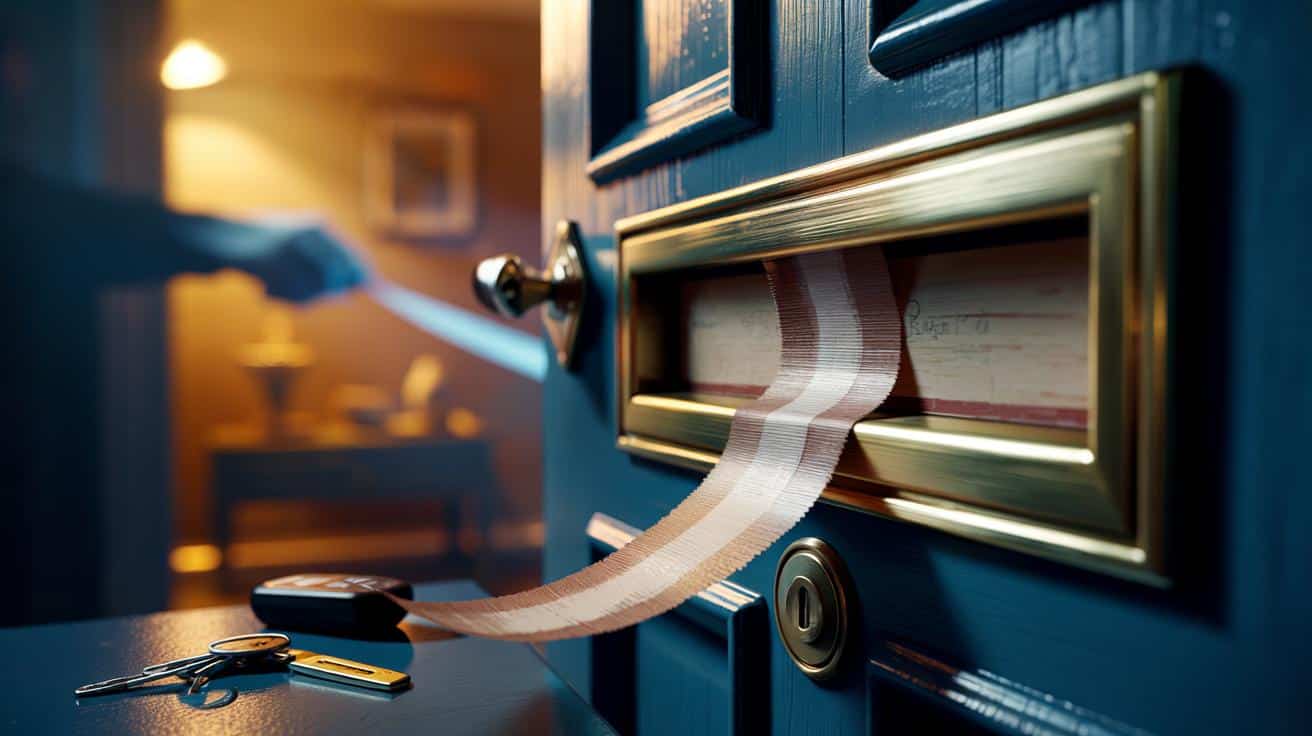
The message is blunt: stop using your letterbox like it’s 2006, and start using a strip of tape to outsmart the latest 2026 home-entry scam.
The street was quiet, the kind of January night that makes sound travel. A terraced row in Leeds, bins lined up, a single hallway light on in number 28. At dawn, the homeowner noticed a sliver of clear tape hanging from the inside letterbox, peeled back at one corner like a wink. No post had arrived yet. No one in the house had opened it. That was the moment the penny dropped.
What police are seeing at UK front doors
Across the UK, officers and community safety teams are warning about letterboxes being probed, tested, even used as silent alarms. The trick is simple: criminals place transparent tape, film, or a thin strip of plastic on or just beyond the flap. If it stays intact through the morning, they read it as “no one opened the door”, and your routine is logged. If it’s broken, you’re home, or at least active. It’s low-tech. It’s effective. It’s everywhere.
In several recent case briefings shared with neighbourhood groups, victims said their letterbox became the first move in a longer play. One family in the Midlands returned from school drop-off to find the inner flap hanging and keys missing from a hallway hook. Another in Bristol noticed flyer fragments wedged in the slot for three days straight — a tell-tale “occupancy check” — before a failed attempt on the back door. We’ve all had that moment where something tiny felt wrong at the front door and we couldn’t place it.
Why letterboxes? Because they’re a hole in your armour, right at hand height. They give line of sight, access for a hook, and a way to place a marker without making a sound. Posties are regular, predictable, and gentle enough that tape can survive a morning round. And many doors still have old-style plates without cages, brushes, or restrictors. Once a pattern is mapped — bin day, school run, late shift — a team can time a quick entry when the house runs on autopilot.
The ‘Tape Method’ to flip the script
Here’s the twist: the same tape trick can protect you. Police-backed crime prevention advisors have been urging households to run a “Tape Method” from the inside, on your terms. Use low-tack masking tape and place a thin, 2–3 cm strip along the inside edge of your letterbox flap before bed or when you leave. Keep it discreet, just enough contact that any lift or fishing attempt will pop it. Check it on your return. Photograph it if it moved. You’re turning their sensor into yours.
Keep it simple and repeatable. Tape goes on the inside, not outside where weather and passers-by can spoil the test. Put it in a new spot each night for a week, then pause for a few days so you don’t create your own routine. If you use the letterbox for post, switch to a parcel box or click-and-collect for the test period. Let’s be honest: nobody resets every security gadget daily. A strip of masking tape you can rip with one finger is the kind of habit that actually sticks.
Think of it as a tiny early-warning system rather than a fortress. If you spot unexplained breaks, escalate: fit a letterbox cage or restrictor, move keys away from the hallway, and talk to neighbours.
“We’re seeing criminals test homes in seconds. A small piece of tape inside the flap can be the nudge that tells you they’ve been at your door,”
said one widely shared police advisory this winter. And because people skim, here’s the fast version:
- Use low-tack masking tape inside the flap at night or when out.
- Vary placement; snap a photo before you leave.
- If the tape moves without a good reason, upgrade hardware and report it.
- Stop using the letterbox for deliveries while you test.
- Keep keys, fobs, and post out of reach of the slot.
How the scam plays out — and how to stay one step ahead
The 2026 version blends old and new. A light touch on the flap, a clear strip set like a tripwire, maybe a camera dot across the road to watch your door. Then a second visit, often within days, when your pattern makes sense to them. *It feels unnerving because it is.* But power shifts quickly when you break the pattern and add friction. A taped flap that pops overnight is a loud message to you, not them.
Common pitfalls are boring, which is why they work. People use duct tape that rips paint. They stick it outside where rain and curious teens do the job for the burglar. They leave keys on the inside lock and a tote bag on the handle. They tell themselves the dog will bark. Dogs sleep. If the tape breaks and you can’t explain it, take it seriously. Equally, a postie’s heavy bundle can snap a delicate strip; cross-check with delivery times before you panic.
Hardware matters once you’ve had a scare. A letterbox cage catches hooks, brushes block line of sight, and a restrictor stops the flap opening wide enough to work. Motion alerts near the door help, yet a determined thief hates time more than cameras. **Stopping the routine is your edge.** **Stopping the letterbox use, even for a few weeks, is your reset.** **Stopping keys from living near the door is your baseline.** Soyons honnêtes : personne ne fait vraiment ça tous les jours.
What you do next travels fast
Share the trick on your street WhatsApp and people will actually try it. It’s cheap, it’s visible, and when a strip goes ping in the night, it creates conversations neighbours remember. That’s how you turn a stranger’s probe into a community story that closes doors — literally. Don’t make a grand announcement. Just do the small thing that changes the script at your front door and talk about what you learned. It’s gritty, a touch DIY, and it works when people are busy and human.
| Key point | Detail | Interest for the reader |
|---|---|---|
| The “Tape Method” flips surveillance | Place low-tack tape inside the flap to detect probing | Gives you an early-warning signal without gadgets |
| Stop using your letterbox temporarily | Pause post through the door; use a box or collect | Removes the easiest way criminals read your routine |
| Upgrade simple hardware | Fit a cage, brushes, and a restrictor; move keys away | Closes the hole burglars exploit in seconds |
FAQ :
- What exactly is the Tape Method?A low-tack strip placed inside your letterbox flap so any lift or fishing attempt snaps or shifts it, telling you the flap moved.
- Won’t the post just break the tape?Sometimes. Run the test overnight or during hours when no post is due, and compare with delivery times to filter out false alarms.
- Will tape damage my door or flap?Use painter’s masking tape, not duct tape. Low-tack types peel off cleanly on uPVC, wood, and painted metal when removed within a day.
- Should I seal the letterbox completely?For a short period, yes: pause door mail and use a parcel box or collection. Long term, fit a letterbox cage and restrictor rather than relying on tape.
- What else stops ‘letterbox fishing’?Move keys and remotes away from the door, add brushes/cage, install a restrictor, and consider a door viewer or camera facing the slot area.




Clever idea—flip the probe into an alert. Trying the Tape Method tonight! 🙂
Isn’t this just going to create false alarms when the post comes? Feels a bit like security theatre tbh.