
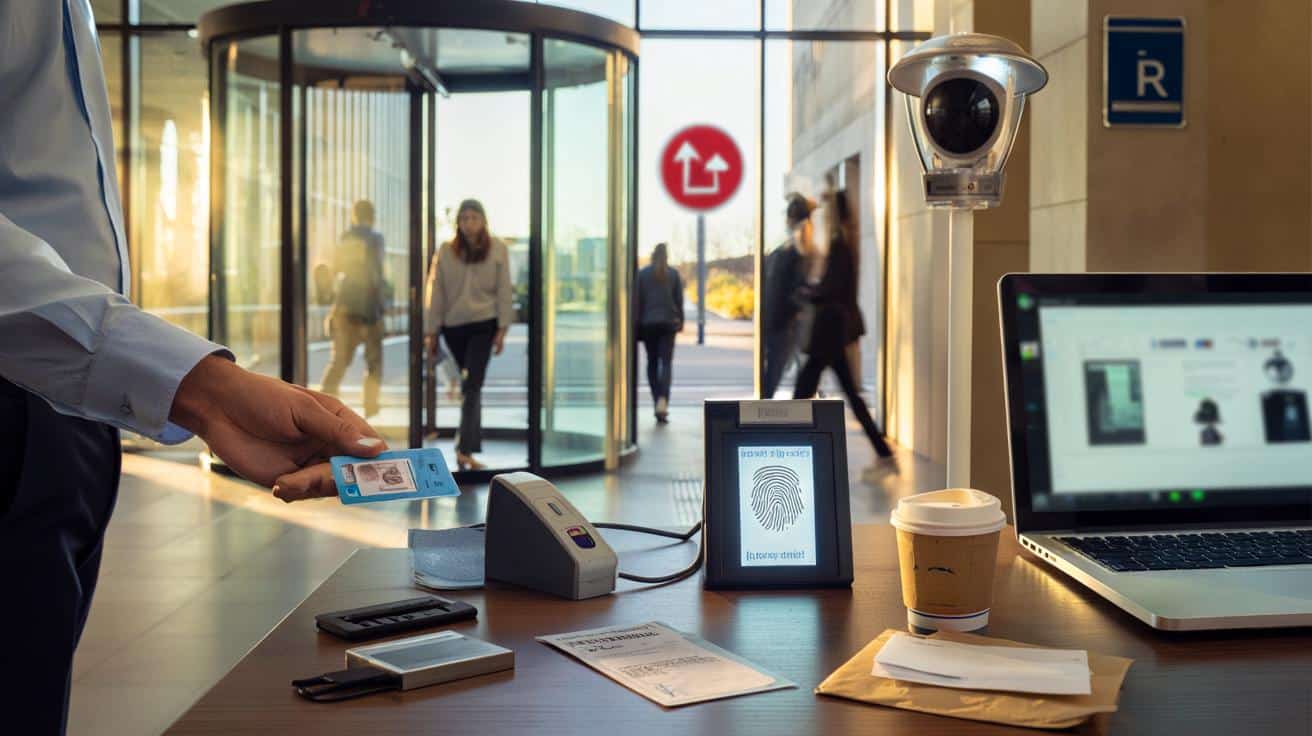
Then, almost overnight, ministers pulled the rug. The national push has been paused — or dropped, depending on who you ask — and workplaces are left holding scanners, policies and a lot of open questions about privacy.
Monday morning at 9:12, a Slack link pings into an HR channel: “Gov drops digital ID plan?” Someone groans; someone else laughs, a bit too loudly. On a back desk, a portable passport scanner sits beside a coffee that’s going cold. A new hire waits in reception with a crisp envelope — the paper kind — because remote checks were supposed to be yesterday’s problem. It feels like the ground shifted under the office carpet.
The IT manager scrolls through procurement emails about identity providers, all signed, all tidy. The compliance lead chews a pencil, re-reading retention policies they drafted for a system that may no longer exist. Out on the floor, people tap in with their plastic badges, blissfully unaware. The quiet part starts now.
What just changed — and what it means on your side of the badge
The U-turn removes the big, central promise: one government-backed digital identity your workplace could plug into. That doesn’t mean identity checks disappear. It means the rails are less straight. Employers still have to confirm you’re you, and the systems they pick will shape how much of your data is collected, shared and kept.
In practice, it looks like this: companies that were waiting to link onboarding to a single national hub will stick with a patchwork of methods. Some will keep video-based verification through certified identity service providers. Others will swing back to eyeballing passports and visas in person. Your badge will still open doors. The question becomes which database remembers that door opened, for how long, and whether that record is used for anything else.
For privacy, the switch is not automatically good or bad. A central ID could have concentrated risk in one place. A fragmented market spreads risk across many vendors and inboxes. That can reduce catastrophic single-point failure. It can also multiply low-grade leaks and over-collection. The legal guardrails haven’t moved: UK GDPR, the Data Protection Act 2018, Home Office right-to-work rules. The risk moves to the edges — the way your employer stitches tools together, the default settings, the expiry dates nobody checks.
Practical moves to protect workplace privacy now
Start with a simple map. List the identity moments at work: job offer, right-to-work, DBS where needed, building access, system logins, device enrolment. For each, write down what’s collected, where it goes, who can see it, and when it’s deleted. Keep it to one page per flow. Data minimisation beats fancy tech every time.
Cut common leaks. If you copy a passport, crop it to what’s required and lock the file with restricted permissions. Don’t mix access control logs with productivity metrics; keep security data in a security bucket. Delete onboarding documents once you hit the legal retention mark. We’ve all had that moment when a file called “SCANFINAL2_REAL.pdf” sits on a desktop for weeks. Let’s be honest: nobody actually does that every day. Build a calendar that nudges deletion like it nudges birthdays.
Think about biometrics with a higher bar. Fingerprint or face for attendance might feel neat, but it touches special category data under UK GDPR if used to uniquely identify you. That means a robust lawful basis, a clear purpose, and an impact assessment you can actually read. No, your boss can’t demand your face on file “just in case”.
“A government pause doesn’t give employers a green light. It’s the opposite. If you keep identity local, you owe people tighter boundaries, shorter retention and fewer eyes on their data.”
- Ask for the policy: how your ID is checked, stored, shared, and for how long.
- Push for alternatives: badge or PIN instead of face where practical.
- Keep the audit trail: vendor contracts, deletion logs, DPIAs.
- Separate security from performance: access logs aren’t a stopwatch.
- Pick certified ID providers where remote checks are needed.
The bigger picture for 2026 workplaces
This isn’t only a story about apps and passports. It’s about who gets to draw the line around your identity at work. A centralised scheme might have made life smoother, yet it would have set the tone from Whitehall. Without it, each employer writes its own rules in the margins of UK GDPR and sector guidance. That can be nimble. It can also be messy.
Expect more talk about attribute-based access — proving “over 18”, “licensed”, “right to work” — without showing the whole passport every time. Expect passkeys and smartcards to hum along, quietly replacing shared passwords. Unions, works councils and staff networks will matter more, especially when a biometric pilot shows up on a Tuesday with a tray of doughnuts. Workplace privacy is about power, not just paperwork.
If the national plan is off the table, trust has to be built closer to the desk. That looks like short, human policies, deletion that really happens, and opt-outs that don’t punish. It looks like IT, HR and the people who badge in every day sitting in the same room, asking “Do we truly need this?” That question travels well. Share it with your team, your manager, your vendor rep. See what happens when the silence breaks.
| Key point | Detail | Interest for the reader |
|---|---|---|
| Fragmented identity checks | Employers will lean on a mix of manual checks, certified ID providers and existing access systems | Expect varied experiences — and varied data footprints — across workplaces |
| Biometric caution | Face and fingerprint use needs strict lawful basis, purpose limits and short retention | Know when you can say no, and what questions to ask if biometrics appear |
| Privacy by design, locally | Mapping flows, minimising data, and deleting on time now matter more than shiny integrations | Practical steps you can take this week to reduce over-collection |
FAQ :
- Does the U-turn mean my employer can’t use biometrics anymore?They still can in limited, specific cases. For identification or access, biometrics may count as special category data, so they need a clear lawful basis and a strong reason. Expect an impact assessment and an alternative route if you object.
- What happens to right‑to‑work checks now?Home Office guidance still stands. In‑person checks with original documents are valid, and many employers will keep using certified identity service providers for remote hires. The change is about the central push, not your legal obligations.
- Can my company keep my passport copy forever?No. Right‑to‑work records should be kept for the duration of employment and two years after it ends, then deleted. Extra copies in email threads and shared folders should go sooner.
- Are DBS and background checks affected?DBS still runs as usual. Digital identity can be used via certified providers, but only the data needed for the check should be collected. Once the result is recorded, supporting documents shouldn’t sit around.
- How do I ask for my data to be deleted?Write to your employer’s data protection contact or DPO, citing erasure under UK GDPR where the data is no longer needed. Ask what’s held, where, and the legal basis. You can also make a subject access request to see the records first.








With the central ID paused, how are smaller employers supposed to vet identity providers? Do we ask for DPIAs, ISO certs, and deletion logs up front, or is that overkill? Also, what’s the lawful basis most teams will rely on — legitimate interests or legal obligation — for right‑to‑work copies? I’d love a plain‑English assessement.
So the passport scanner is now a very expensive coffee coaster? 😅 Guess we’re back to paper envelopes and “SCANFINAL2_REAL.pdf” sitting on desktops.