
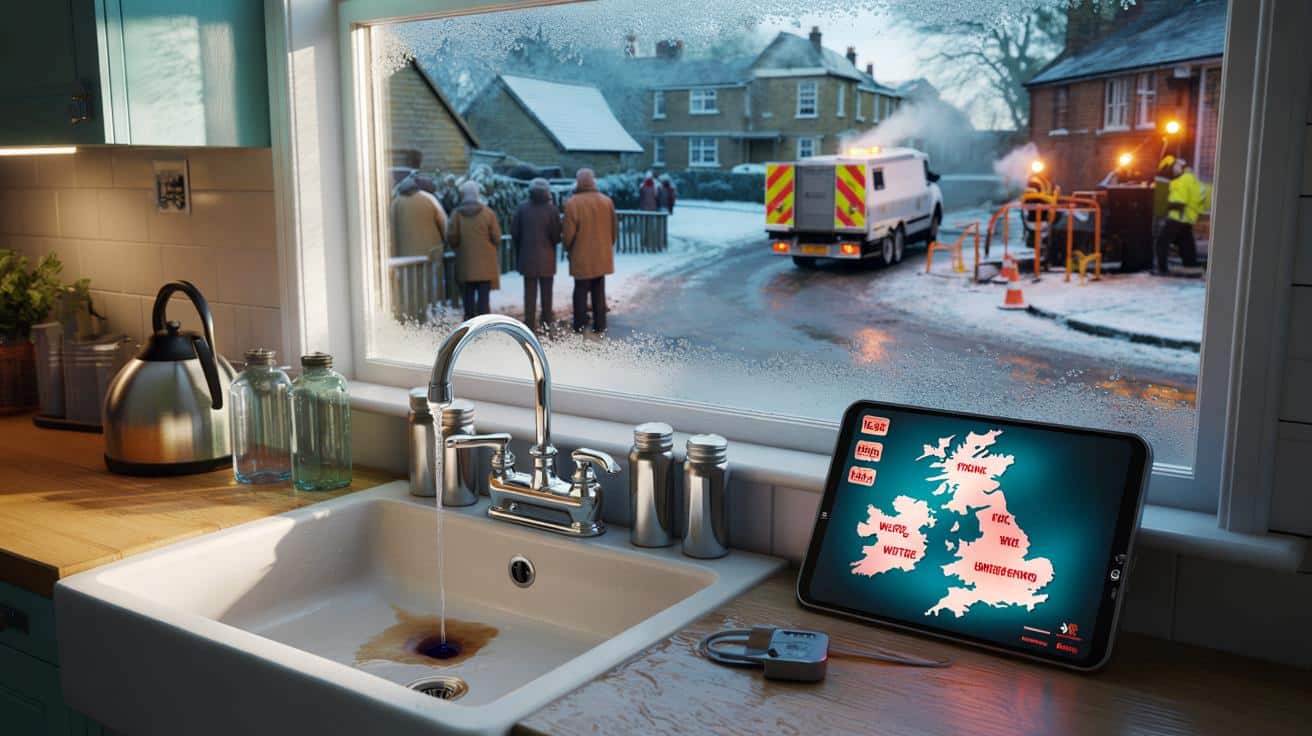
Britain’s taps are sputtering under a brutal cold snap, with utilities moving to emergency rationing as freeze–thaw bursts rip through ageing pipes. Twelve regions are braced for rolling restrictions, bottled-water stations, and “pressure management” hours that could leave morning sinks and evening showers bone dry.
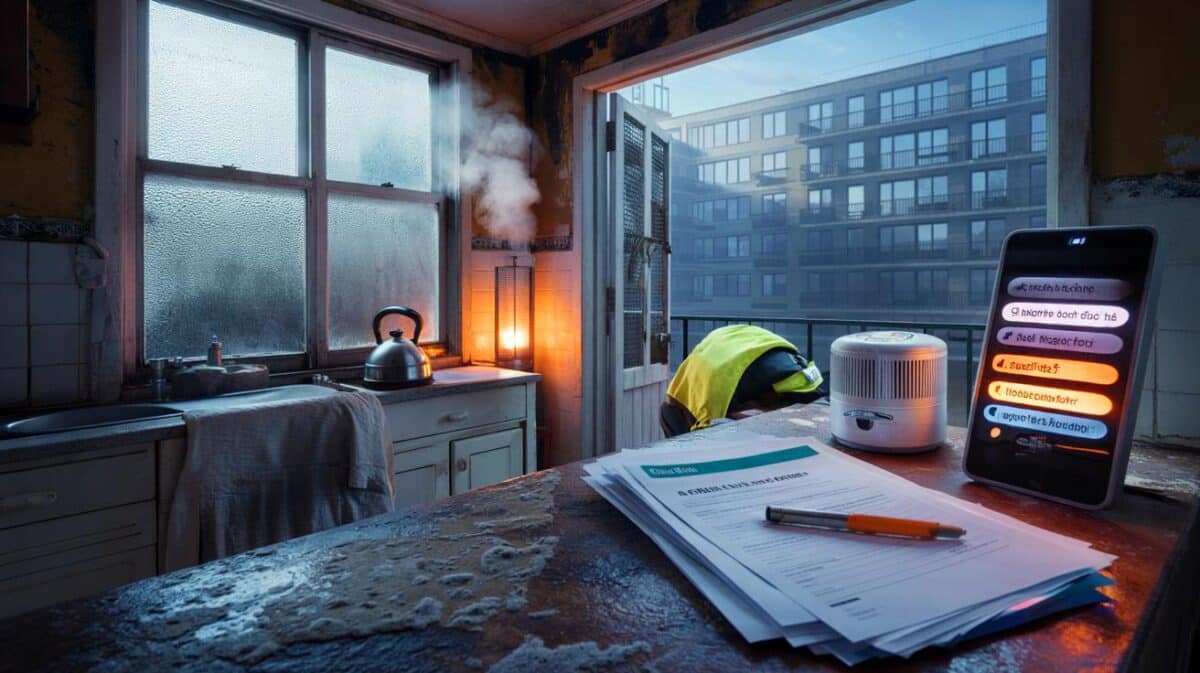
A harsh cough of air, a thin brown trickle, then nothing. He rattles a kettle, checks his phone, and every neighbours’ group chat is the same wallpaper of panic: anyone heard about the rationing window, where do we get water, does the school stay open.
The silence of a tap that should hiss is oddly loud. Outside, a tanker idles under frost, its orange beacon strobing the street. Somewhere down the block, a main is leaking warmth into the road like a secret. Then the maps lit up.
Where taps are running dry — and why pipes are failing
This week’s Arctic air didn’t just freeze puddles. It crept into the gaps of a very old network and made itself at home. Across the country, utilities are activating “emergency rationing” protocols: short, controlled supply windows and pressure drops to stop a bad situation turning into a major outage.
Reports echo from terraced streets in Leeds to cul-de-sacs in Taunton. The 12 regions flagged for restrictions are: North East, North West, Yorkshire and the Humber, East Midlands, West Midlands, East of England, London, South East, South West, Wales, Scotland, and Northern Ireland. In parts of these areas, bowser trucks are rolling and schools are sending “bring a bottle” messages before lunch.
Freeze–thaw is a bully. Tiny fractures become splits when ice forms and expands, then sudden flows after sunrise tear the weakened joints apart. Pump houses trip to protect themselves, valves jam, and pressure zones collapse like a line of dominoes no one meant to push. The system is designed to cope; it’s just facing a week that asks too much of Victorian mains and modern demand.
What to do now: small moves that stretch your water and your sanity
Build a 24-hour buffer, quietly. Fill clean bottles, flasks, and big pots while the water is on. If you have a bath, half-fill it and cover the surface with cling film to slow evaporation; keep it for flushing and washing, not drinking.
Save water where it matters most: drinking, cooking, hygiene. Flush with a bucket, not every time. Boil once, pour into a thermos, and sip through the day. Let’s be honest: nobody keeps a week’s stash under the sink until the day the tap dies. Start now and make a habit out of three extra litres per person, per day.
We’ve all had that moment when a simple rinse turns into juggling mugs and a kettle, and it’s fine to laugh about it later. Insulate outdoor taps with an old sock and tape. Keep a slow drip on the coldest line to prevent freezing if your utility confirms it won’t worsen losses in your street.
“In a freeze–thaw, every litre you save is a litre that helps keep pressure up for your street. Think of rationing as a shared act, not a punishment,” said Dr Nina Patel, infrastructure analyst.
- Check your utility’s app for rationing windows and bowser locations.
- Join the Priority Services Register if someone in your home is vulnerable.
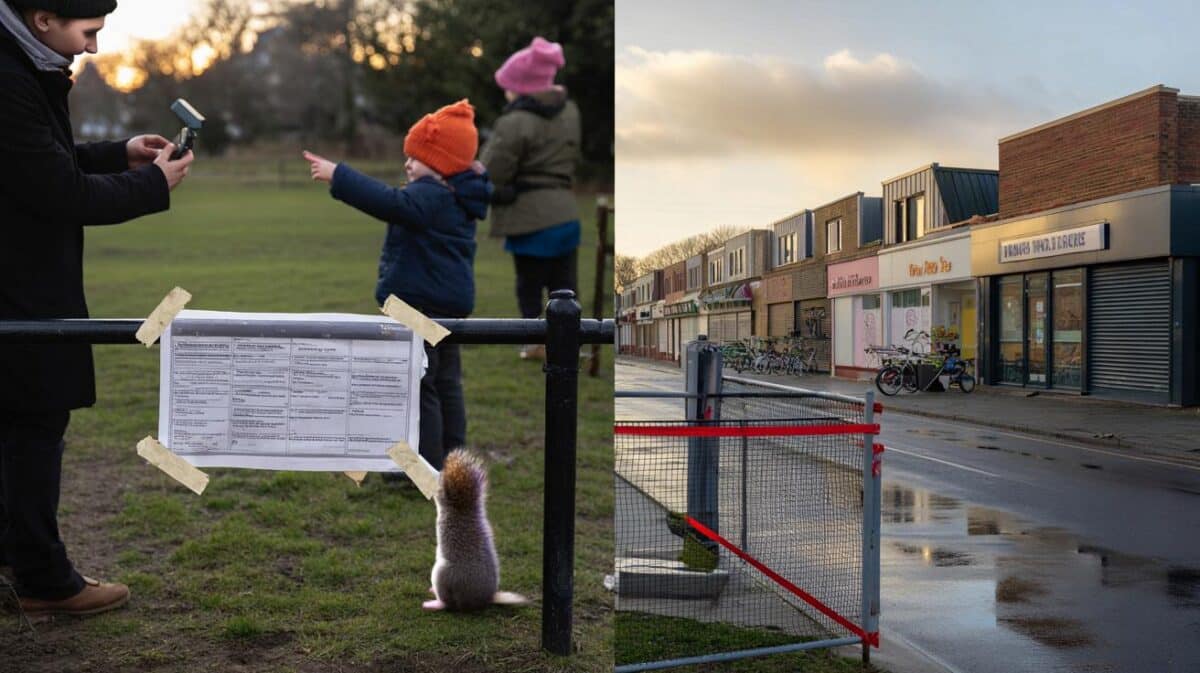
- Report visible leaks fast; a photo and postcode help crews triage.
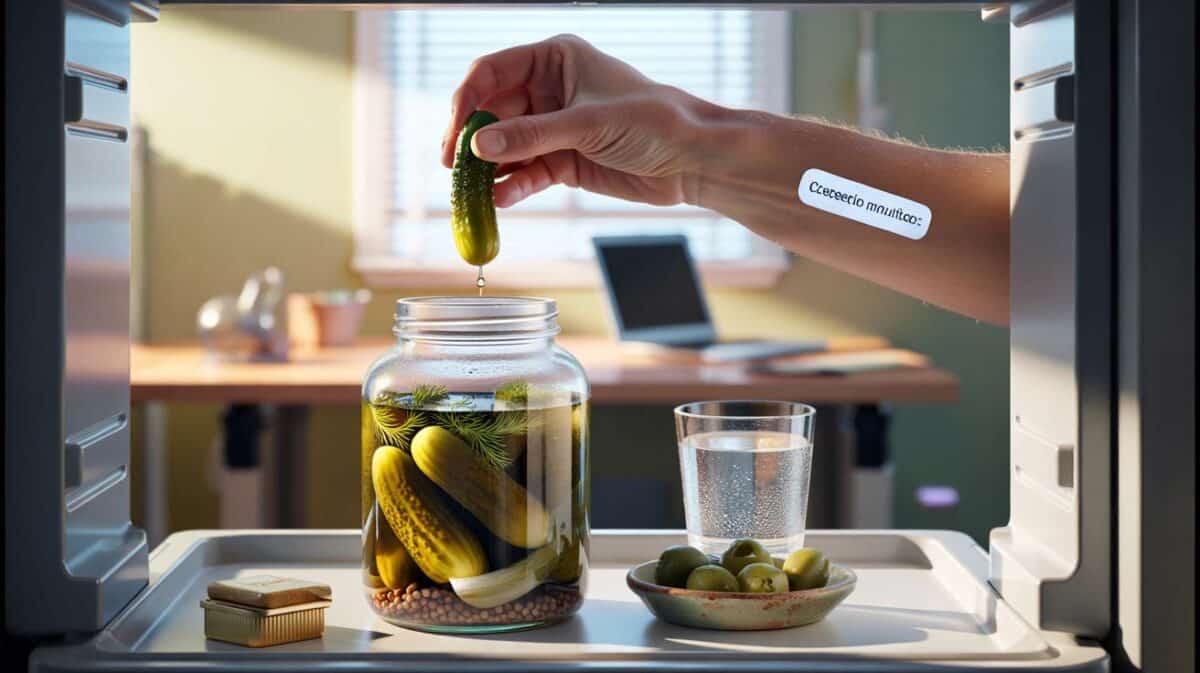
- Store a jug in the fridge now — cold water tastes better and reduces reboiling.
Inside the rationing map: what’s really happening on your street
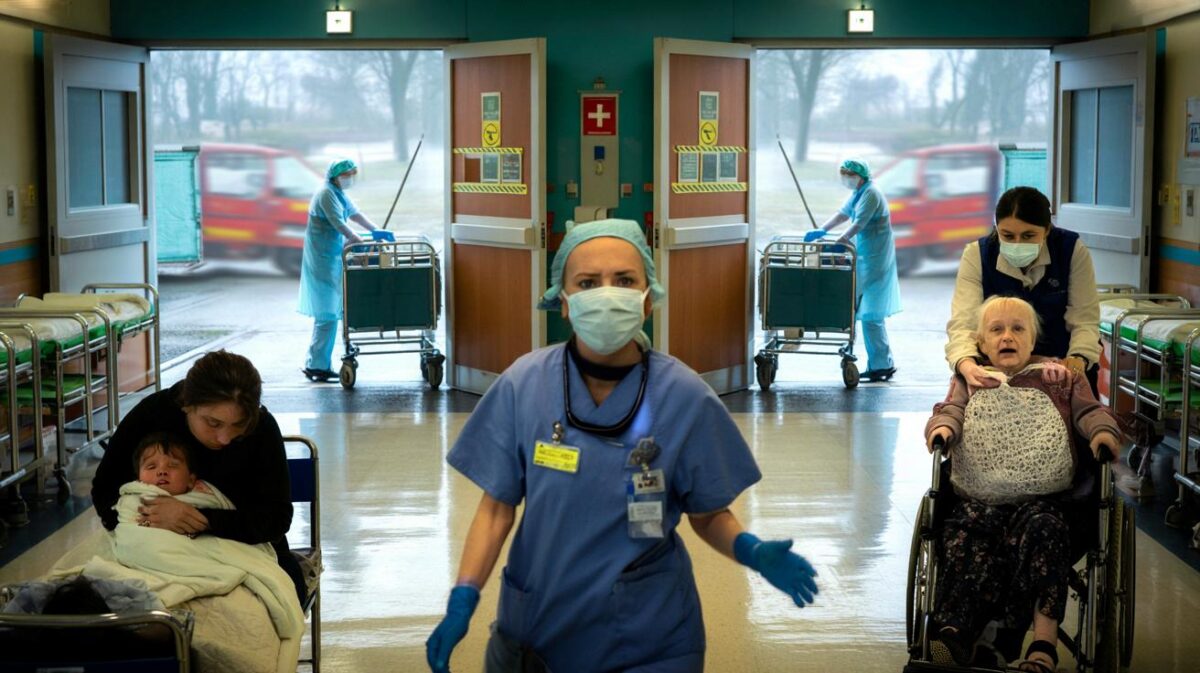
“Rationing” sounds medieval, but it’s mostly valves and maths. Utilities use pressure management to deliver water in pulses, protecting fragile mains while crews hunt breaks and swap out blown joints. A typical pattern looks like 6–9am and 6–9pm with decent flow, then a deep lull. That’s not a promise, just a tactic that buys time and keeps hospitals and care homes prioritised.
On a frosty cul-de-sac in Leeds, a care worker named Shanice queued for a bowser before dawn, then split four bottles between two neighbours. One had newborn twins, the other an elderly dad with a chest infection. It’s the quiet part of Britain’s response you won’t see on utility dashboards — the doorbells, the shared cups of tea boiled on a camping stove, the text that says “bring two containers, I’m already there.”
Many pipes in the UK date from the 19th and early 20th centuries. They weren’t laid for today’s population, today’s heating patterns, or today’s climate whiplash where hot, dry summers are followed by bone-cutting cold snaps. Investment is coming, but engineering schedules move slower than weather. The near-term fix is targeted rationing and leak-chasing; the long-term answer is deeper mains, smarter valves, and real-time sensors that spot micro-leaks before they bloom.
The 12 UK regions on the edge — and how to ride out the next week
Here’s the raw view: if you’re in the North East, North West, Yorkshire and the Humber, East Midlands, West Midlands, East of England, London, South East, South West, Wales, Scotland, or Northern Ireland, expect unpredictable taps for a few days. That doesn’t mean every street runs dry. It means you’ll have to think like a camper in your own kitchen and treat water as a finite shift worker who clocks in, then out.
Start with leaks inside the home. Feel under sinks for damp, listen for the hiss of a constantly filling cistern, and turn off your outdoor stop tap if it’s freezing. Use a bowl in the sink and repurpose “grey” water for plants or the loo. If you’re filling bottles from a bowser, clean the cap threads and label the fill date. Small rituals make messy days smoother.
Your heating can help your pipes. Keep rooms at a steady low warmth rather than swinging from off to tropical. Open the cupboard that hides the stop tap and let it breathe.
“Pipes don’t like extremes. Consistency is kinder than heroics, and a little prep beats a midnight scramble,” noted site manager Lewis Grant on a burst repair in Bristol.
- Know your stop tap location and test it while the water is still on.
- Pack a “water kit”: two bottles, a funnel, wet wipes, a marker pen.
- Plan one-pot meals that use less washing up, like soups or stews.
- Share: if your flow is good in a window, fill a bottle for a neighbour.
What this cold snap is really telling us
This isn’t just weather; it’s a stress test. When the mercury falls, water systems show their age, and communities show their reflexes. London flats with whisper-thin copper lines, farmhouses in Fife with private stretches of pipe, terraces in Birmingham built before the motorcar — all are learning the same lesson: resilience is local, and it starts with the person at the tap.
The fix isn’t only more pipe. It’s deeper and smarter pipe. It’s leak-detecting acoustics and meter data that flags a silent drip before your street turns into a stream. It’s power backup at pump houses, and valves that feather pressure instead of slamming it. It’s public dashboards that speak plainly, not euphemisms. And it’s neighbours who knock. Somewhere between climate volatility and Victorian brick, Britain is choosing how it wants water to feel in 2030. That choice begins with this week’s rationing map, and the stories it writes.
| Key point | Detail | Interest for the reader |
|---|---|---|
| Regions affected | 12 UK regions flagged for emergency rationing and pressure management | Check if your area is likely to see dry taps |
| How rationing works | Timed windows, lower pressure, protection of critical services | Plan your day around likely water-on periods |
| What to do now | Store 24 hours of water, insulate taps, fix household leaks, report bursts | Practical steps that make outages shorter and easier |
FAQ :
- Which areas are facing restrictions right now?Utilities have named parts of the North East, North West, Yorkshire and the Humber, East and West Midlands, East of England, London, South East, South West, Wales, Scotland, and Northern Ireland for rolling measures.
- How long will the rationing windows last?Typical windows run 2–3 hours morning and evening while crews fix bursts, though timings can shift daily with new breaks.
- Is bowser water safe to drink?Yes, it’s potable. Use clean containers, secure caps, and keep them out of direct sunlight. Refresh your supply every 24 hours if possible.
- Should I leave taps dripping to stop freezing?Only if your provider says it won’t harm local pressure. In many post-burst zones, every saved litre helps stability more than a slow drip.
- What if someone in my home is vulnerable?Join your water company’s Priority Services Register for tailored alerts and deliveries during prolonged outages.

Thanks for the clear breakdown — this is actually useful. I’ve started a 24‑hour buffer, half‑filled the bath and covered it with cling film, and I’m insulating the outside tap with a scruffy sock. Joining the Priority Services Register was quick too. The “boil once, thermos all day” tip will definately save gas and stress. Will utilities push live maps of bowser locations and pressure windows in one place, or do we have to hop app‑to‑app?