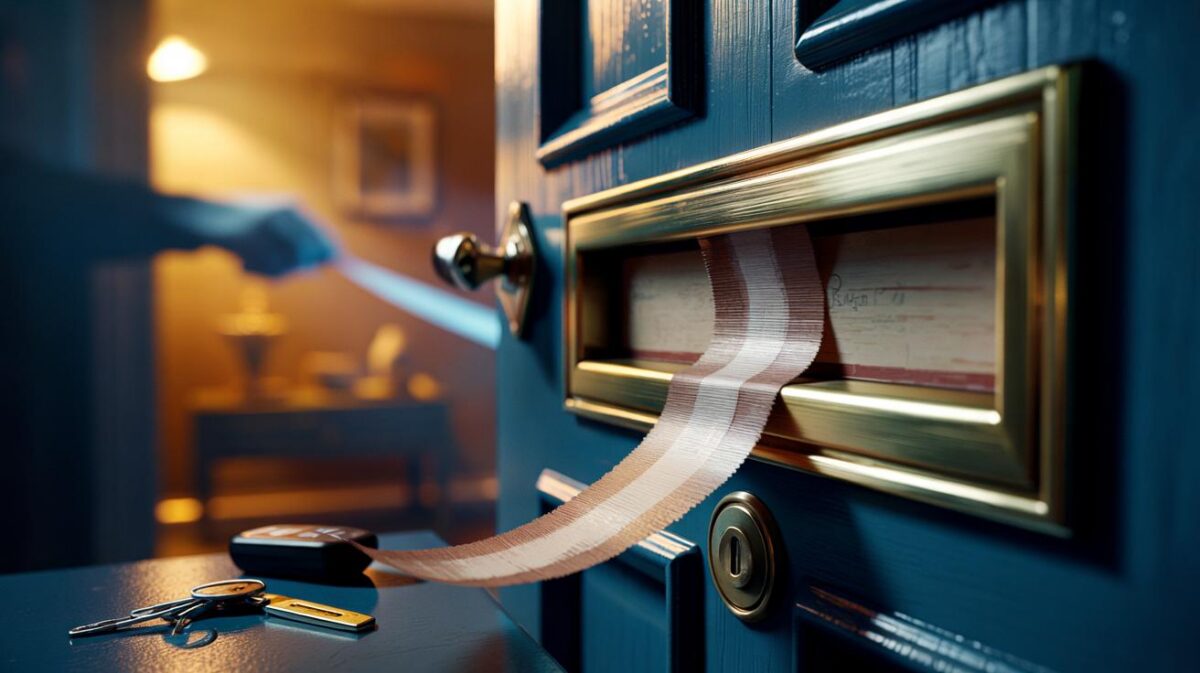
That thin line of daylight beneath the front door? It’s not just annoying. It’s a leak that keeps your boiler working overtime. Across the UK, a tiny £2 strip from the hardware aisle is trending for one blunt reason: it works. The “5‑minute door seal” is being credited with shaving as much as **£40 a month** off heating in real homes right now.
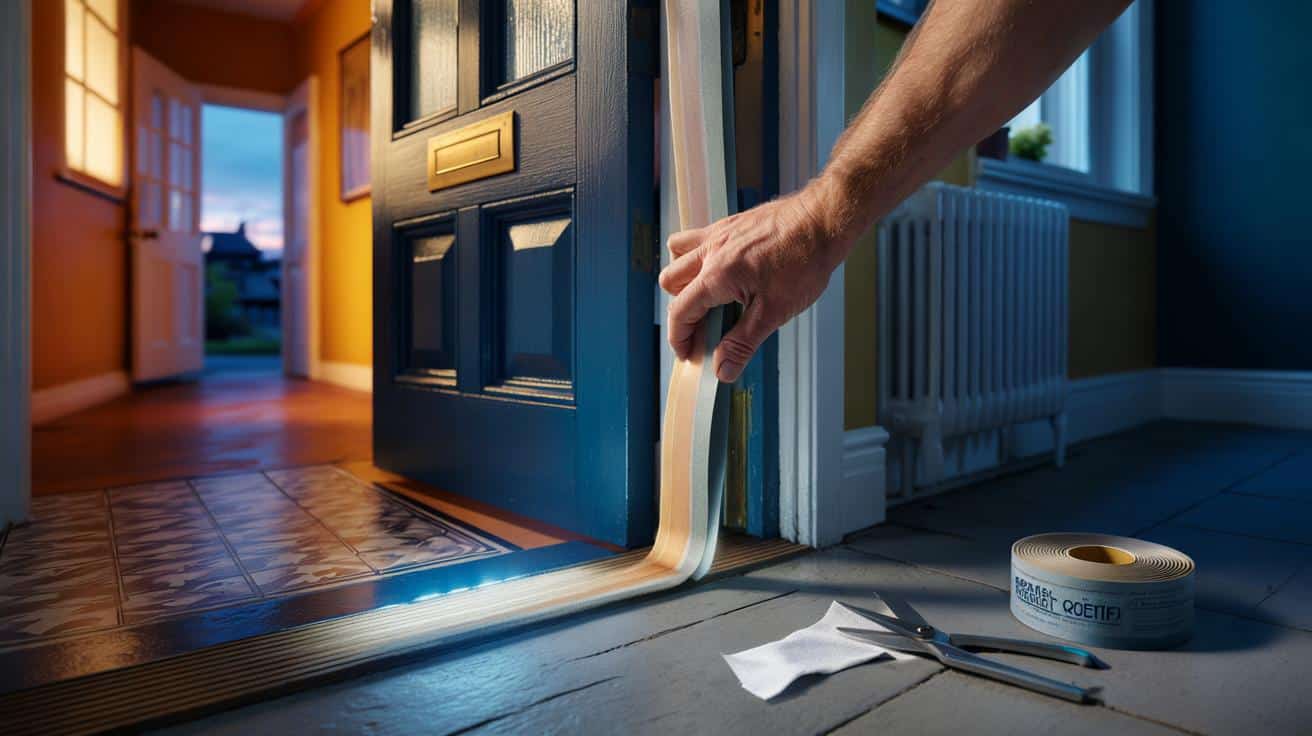
I’m in a hallway in early evening, the kind where the floor tiles are always a little colder than your socks can handle. The central heating hums, then cuts out, then starts again, chasing a setpoint it can’t quite hold. A narrow snake of cold air creeps under the door. A roll of self-adhesive foam appears from a kitchen drawer. There’s a quick clean, a peel, a press. You can feel the air stop, like someone turned off a tap. The fix took five minutes. The bill noticed.
Why a £2 strip changes how your home feels
Warmth doesn’t just drift away; it gets pulled out by pressure and gaps. Doors are the usual suspects, especially in older British homes where frames have shifted by millimetres. You don’t need a gale to lose serious heat. A steady thread of cold air will lower the temperature in the hall, trigger the thermostat, and set your boiler cycling. It’s a tiny leak that behaves like a big one.
In Bristol, a renter named Farah tracked her smart meter during a cold snap. She stuck a £1.99 foam strip around her front door and a brush seal at the bottom. Over the next four weeks, gas consumption dropped by roughly 12%, even though the thermostat stayed at 19°C. That meant £36 off compared with the same period last year, and she swears her hallway stopped smelling like the street. Real life is messy, but the pattern was there.
The physics is dull and decisive. Cold air enters low, warm air escapes high: the stack effect. Seal the low points and your heated rooms hold their line. Your boiler or heat pump runs fewer cycles, radiators keep a steadier temperature, and you may nudge the stat down by half a degree without noticing. Less noise from the corridor, less dust, fewer whiffs of cigarette smoke from outside. It’s not just energy saved; it’s comfort reclaimed for pennies.
The 5‑minute method that actually works
Pick up a self-adhesive foam weatherstrip, 5–9 mm thick, plus a simple brush or rubber seal for the door bottom. Wipe the door frame where the strip will sit, then dry it. Measure, cut the foam cleanly, and run it along the side where the light peeks through, then the top, then the hinge side if needed. Press for 30 seconds. Close the door and listen. The silence is your first win.
A quick paper test helps: trap a strip of paper at the latch and try to pull it. A gentle tug is right; locked tight means your seal is too thick. Don’t wrap the latch area so tight the door won’t close in winter swell. Renters love this because removal is simple, paint-friendly, and it works on internal doors too. Let’s be honest: nobody does that every day.
We’ve all had that moment when a small fix makes a home feel different. The trick is keeping it simple and repeatable. Start with the front door, then the back, then any draughty internal door that splits warm and cold zones.
“I fit heat pumps for a living and still tell people to seal their doors first,” says Rob, a heating engineer in Leeds. “It’s the £2 fix that makes every other upgrade feel better.”
- Buy: self-adhesive foam (5–9 mm), plus a brush seal for the bottom gap.
- Tools: scissors or a sharp knife, a cloth, maybe rubbing alcohol for cleaning.
- Where: Pound shops, B&Q, Screwfix, supermarkets, online multi-packs.
- Time: 5–10 minutes for a door, 20 if you’re taking your time.
- Good for renters: yes. Peel off slowly when you move.
Small seal, big month
The gap under your door won’t trend on social media, but your meter will notice. In homes with electric heating or long hallway thermostats, closing that leak can be dramatic. For gas, the savings tend to stack quietly across cold weeks. You might spend £2 today and feel warmer tonight, then spot a softer curve on the usage graph by the weekend. *Warmth you’ve already paid for shouldn’t be slipping under the door.* If a thin strip can hold it in, that’s a small win worth sharing with your mates.
| Key point | Detail | Interest for the reader |
|---|---|---|
| Seal the small gaps first | Door frames and thresholds leak heat via infiltration | Cheapest fix delivers fast comfort you can feel |
| £2 can cut monthly costs | Households report up to **£40 a month** saved in cold spells | Low risk, high potential payoff during peak usage |
| Five-minute fit | Clean, stick, press, test with paper; adjust thickness | Immediate result, no tools or trade skills needed |
FAQ :
- What is the “5‑minute door seal”?A self-adhesive foam or rubber strip that closes the tiny gap around a door frame, often paired with a brush seal at the bottom. It stops cold air sneaking in.
- Does it really save up to £40 a month?Some households report that figure during cold snaps, especially with electric heating or multiple doors sealed. Typical savings vary, but many see a clear drop in runtime and bills.
- Will it damage paint or the door?Not if you clean first and use standard foam strips. Peel slowly when removing and any residue wipes off with warm soapy water or citrus cleaner.
- Can I do this in a rental?Yes. It’s non-invasive and removable. Keep receipts and take pictures before/after if your landlord is particular about fixtures.
- What size strip should I buy?Most UK doors take 5–9 mm foam for the frame and a brush seal sized to the threshold gap. If the door is hard to close, use a thinner strip.