
The UK’s best-loved winter festival — the one whose glow you could see from the train — has pulled its 2026 return. Tickets never went on sale. Vendors stayed home. Families who’d marked it in their calendars now face a blank weekend, and a bigger question: why did a sure thing go dark?
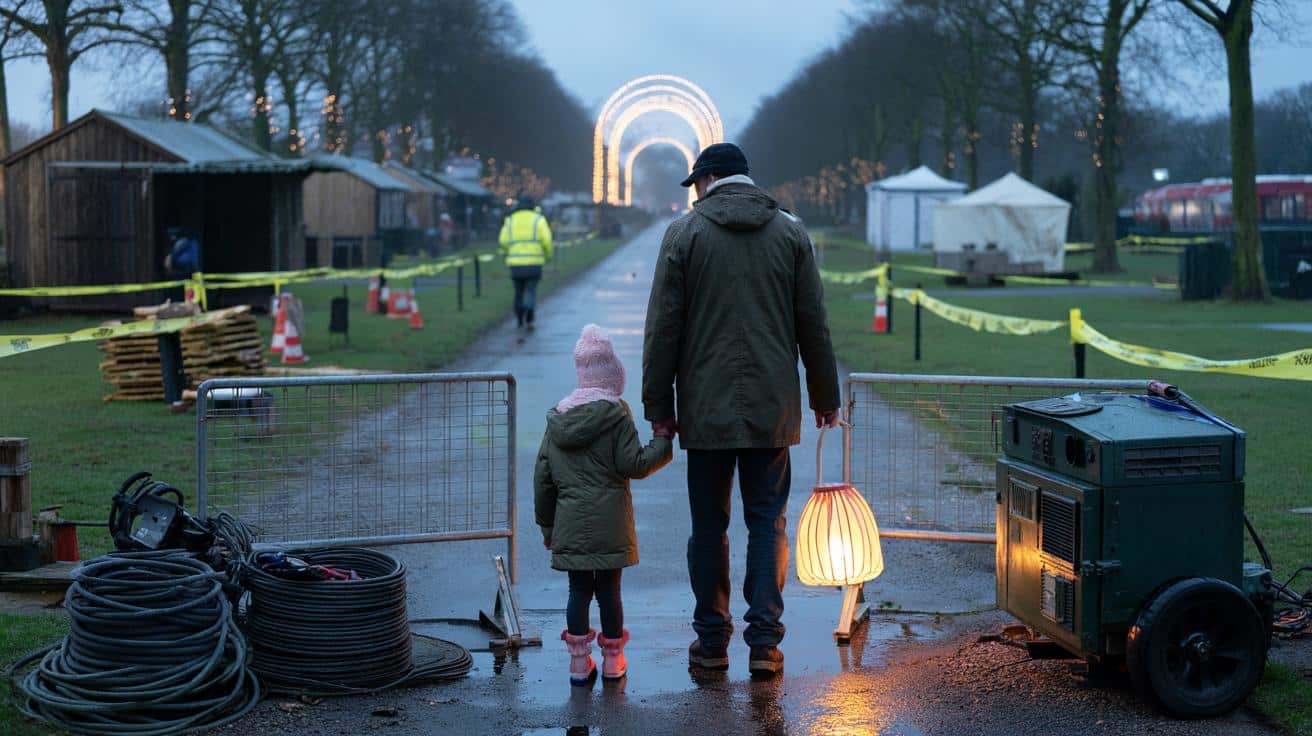
I walked the park at dusk a few hours after the news broke. Last December there were marshmallow fires on the breeze, strings of light stitched between bare branches, and the measured hum of queues edging forward. This time, only dog-walkers and the echo of a steward’s radio from a previous life, as if the site itself hadn’t heard the update. A dad paused by the empty railings where, he told his daughter, the archway used to shimmer. He looked embarrassed, like he’d promised a magic trick and lost the deck. The lights didn’t just fail to switch on. They disappeared from the story.
What really killed the 2026 comeback?
The easy answer is money. The real answer is a tangle of costs, time, and weather that finally snapped. Energy isn’t just a line on a spreadsheet when your show is made of light; insurance isn’t trivial when storms keep naming themselves. Sponsorship softens, site fees climb, and overnight your fairy tale starts to look like logistics.
Think of it like building a tiny city for six weeks, then dismantling it in the rain. Power distribution, cable runs, temporary roadways, crowd marshals, toilets, all assembled under short days and long expectations. A few winters of heavy flooding and wind blew the risk models wide open. The premiums that follow don’t sparkle. Neither do the late-stage security and medical budgets after a year of busy headlines.
Even with sell-out nights, the curve is fragile. Festive events are weekend-heavy, and a couple of washouts can wipe a forecast clean. Ticket prices can’t float forever without public pushback, and vendors can’t absorb endless uncertainty. Councils want robust plans and audited safety; neighbours want quiet; sponsors want certainty. When the maths refuses to behave, magic loses the vote.
Could it have been saved?
Possibly, with a smaller footprint and a smarter kilowatt. Some festivals survive by shrinking the map: tighter routes, fewer high-draw sculptures, more recycled frames with new skins. LED tech helps, as do timed entry windows that spread the load. The rule we kept hearing: cut megawatts, not moments.
Early planning buys you oxygen. Lock power years, not months, ahead. Negotiate local supplier clusters to keep haulage down. Diversify revenue so it isn’t just tickets and hot chocolate carrying the world. Communicate changes plainly — families plan around this stuff. We’ve all had that moment where a tradition slips through our fingers. Let’s be honest: nobody really does that every day.
There’s also the question of weatherproofing the experience. Heated waiting bays. Covered queue runs. More resilient ground protection so a wet fortnight doesn’t close a gate.
“We can’t control the sky, but we can control what happens under it,”
said a line I heard more than once on production calls, the kind that end with awkward silence and someone doing the sums again.
- Fix the basics first: power, ground, people.
- Design for rain as the default, not the exception.
- Hold a clear refund and rollover policy.
- Invite the community into decisions before they harden.
Where the glow goes next
Perhaps the festival’s exit isn’t a finale, only a pause for breath. The appetite hasn’t dimmed; the economics just flared red in a way you can’t wish away. New models exist: lighter trails, pop-up weekends, neighbourhood micro-routes stitched into daily life. You watch smaller productions thrive because their ambitions fit the weather, the power bill, the calendar.
Some will wait out the storm and come back leaner. Others will seed their magic across cities — partnering with high streets, arts centres, markets that are already warm. *Maybe the darkest paths teach us where to hang the next lantern.* Fans will share maps of alternatives, creators will swap files and hire lists, and councils will test rules that fit the new reality. The glow travels; it doesn’t vanish.
| Key point | Detail | Interest for the reader |
|---|---|---|
| Rising operational risk | Energy, insurance and staffing costs outpaced ticket revenues | Explains why “sold out” doesn’t always mean sustainable |
| Weather and timing | Storm seasons collided with peak weekends, erasing margins | Helps you see how a wet Saturday can sink a season |
| Paths forward | Smaller footprints, smarter power, community partnerships | Shows where to find the next glow — and how to support it |
FAQ :
- What exactly was cancelled for 2026?The festival’s full winter return — the large-scale light-and-ride experience people travel for — won’t run in the 2026 season.
- Will there be smaller events instead?Organisers indicate they’re exploring pop-ups and collaborations, with dates announced closer to winter if feasible.
- Why not just raise ticket prices?Beyond a point, higher prices shrink families’ budgets and goodwill, and they don’t fix weather risk or insurance shocks.
- Can I get a refund for anything I pre-booked?If you bought travel or hotels, check flexible policies; the festival hadn’t opened ticket sales for 2026 at the time of the announcement.
- Where should I look for alternatives?Try local light trails, botanical gardens, city centre illuminations, and regional arts programmes that spread dates across the season.





If tickets never even launched, does that mean the risk models blew up months ago? I’d love more detail on the insurence side—were premiums tied to storm thresholds or just a blanket hike?
Plot twist: the lights didn’t go out, the budget did 🙂 Guess we’ll be roasting marshmallows over a spreadsheet this year.