
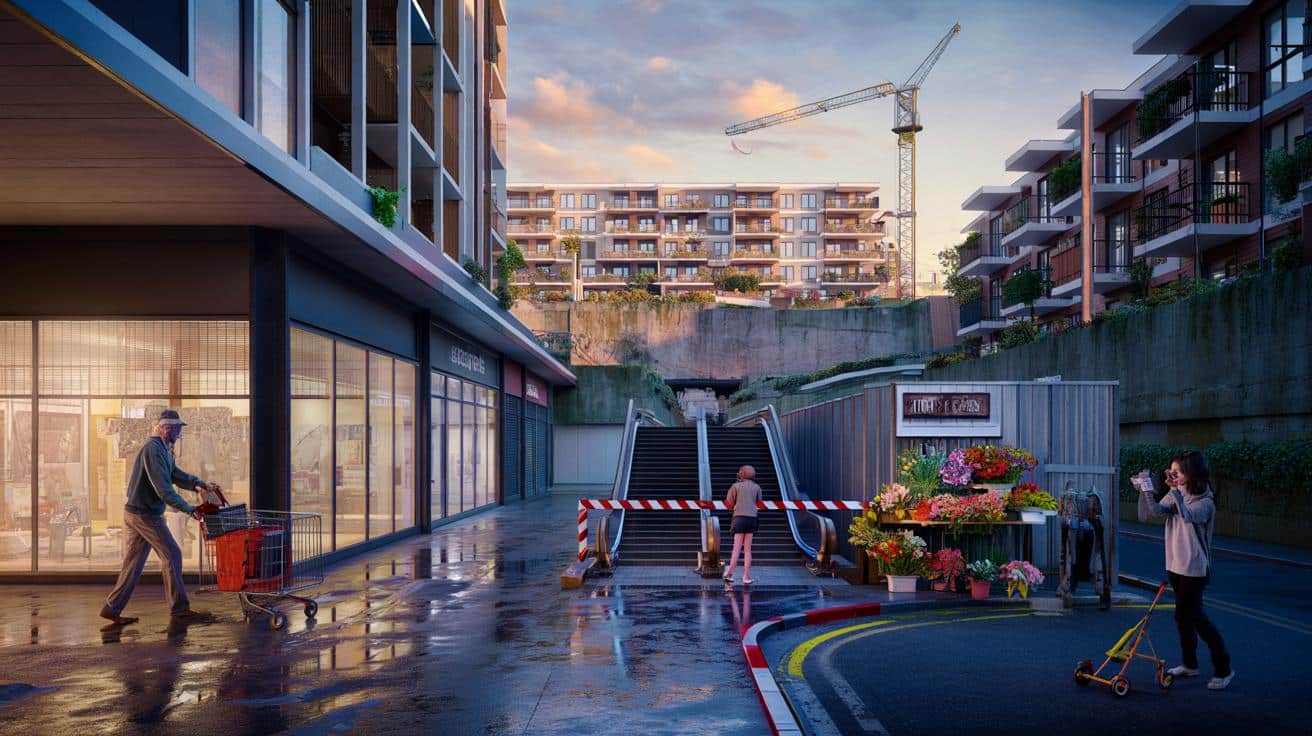
Not by halves, not with a polite rebrand, but with a full shuttering and the promise of roughly 2,000 new homes in its place. The phrase “Death of the High Street” suddenly feels less like a headline and more like a notice on a metal grille. The questions arrive fast: what fills the gap, where do the traders go, and will a new neighbourhood really rise where a mall once stood?
I walked past the taped-up posters and half-lit corridors yesterday, and the air smelled faintly of popcorn, disinfectant, and something like goodbye. A cleaner steered a rattling trolley through a quiet atrium where the Christmas lights used to sparkle in July. Two teenagers took photos by the closed escalator, laughing at nothing in particular, while a florist across the way arranged stems for a last few loyal customers. *It felt like the last day of term.*
Near the entrance, a noticeboard listed “final trading days” in neat rows that didn’t feel neat at all. There was a map with arrows showing temporary routes and a neat line tying the future to an artist’s impression. It looked like the place had already moved on, even if the shutters hadn’t come down yet. One line, in bold letters, fixed the tone: full closure before demolition for around 2,000 homes. A small line beneath read: timelines subject to final approvals.
What a full closure really signals
You can’t mistake it for a refresh. A total closure says the old model isn’t just tired; it’s finished. It’s also a bet on an urban idea that’s now mainstream: housing-led town centres, with ground floors for cafés, clinics, maker spaces and gyms. The mall becomes a neighbourhood. Not overnight, and not without friction.
There’s an old playbook here. Elephant & Castle’s shopping centre closed, then rose as rental blocks and student rooms. Nottingham’s Broadmarsh was partly demolished, creating a new kind of civic void waiting to be shaped. Canada Water’s masterplan put homes where a suburban-style mall once ruled the weekend. Different places, same pattern: shrink the retail footprint, raise homes, stitch in parks, and hope the footfall follows.
It’s not mystical. Retail was overbuilt for an era of car-first convenience and catalogue-style choice. Online ate the mid-market. Rents misread reality. Vacancy rates in British town centres have hovered around 13–14%, stubborn as moss on brick. The capital and the carbon now sit in the ground beneath those shops, not in their neon. So the money follows the certainty: housing need, long leases, institutional landlords who like steady rent and predictable maintenance. That’s why this keeps happening.
How to navigate a town-centre transformation
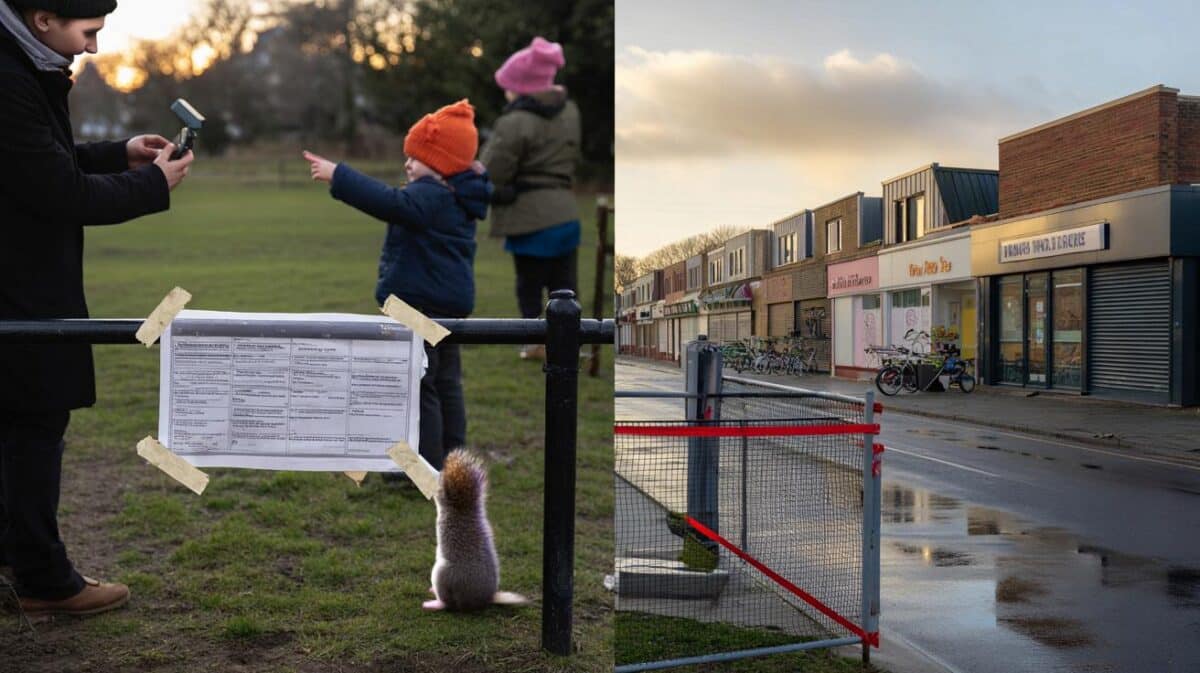
Start with the basics: map your own life onto the change. Where will you pick up prescriptions during the build? Which bus routes shift when hoardings go up? Get the phasing plan, not just the glossy masterplan. Mark the temporary routes on your phone. Photograph the consultation boards and keep the public PDFs. A redevelopment is a story told in stages; knowing Act One keeps you sane.
Traders face a different playbook. Push for meanwhile units at peppercorn rents, near the desire lines, not buried at the back of a compound. Ask for fit-out support in writing. Request signage on hoardings and social feeds that actually drive custom. Let’s be honest: nobody really does that every day. Yet the ones who do survive the lull. Negotiate relocation packages with dates, not vibes, and look for clauses that protect you against slippage.
We’ve all had that moment when a place you love starts to feel like a memory while you’re still standing in it. Say it out loud. Then channel it.
“Homes will bring life back,” a resident told me, “but life isn’t just beds. It’s tea breaks, errands, bumping into people. Don’t cut that out and call it progress.”
- Ask for ground-floor plans with real front doors on real streets.
- Press for small unit sizes, not just big-box shells.
- Back safe, well-lit walking and cycling links that join old and new.
- Push for apprenticeships during demolition and build, not after.
- Demand transparent timelines with quarterly public updates.
Beyond the headline: a town remade in public
The phrase Death of the High Street makes it sound like an obituary. It’s messier. Towns remake themselves in public, out in the rain, with scaffolding and diversions and meetings where the tea goes cold. A mall closes and it does feel final. Then a new block opens with laundry hanging on a balcony and a kid testing a scooter on fresh tarmac. Life edits itself into the gaps. Share what you want to keep, and say what you can let go. The rest is up to all of us.
| Key point | Detail | Interest for the reader |
|---|---|---|
| Closure means a full reset | Retail footprint shrinks as mixed-use takes over | Signals which services may move, and where life shifts next |
| Homes drive viability | Long leases and demand make 2,000-home schemes stack up | Explains why housing arrives where shops once stood |
| Engagement changes outcomes | Phasing, meanwhile use, and street-level design can be influenced | Clear steps to protect everyday convenience and local trade |
FAQ :
- Is this closure permanent?Yes for the existing mall. The plan replaces it with a new mixed-use neighbourhood, including around 2,000 homes, subject to detailed phases.
- When will shops shut their doors?Closures usually happen in phases. Look for a “final trading days” notice and a phasing map published by the owner and council.
- What happens to my favourite local traders?Some relocate nearby, others take meanwhile units, a few may close. Ask for a public relocation register and updates every quarter.
- Will the new ground floors still have shops?Yes, but fewer, smaller, and often more service-led. Think cafés, clinics, co-working, and convenience rather than endless fashion chains.
- How long will the whole redevelopment take?Commonly 5–10 years in stages. Demolition, infrastructure, first homes, then later plots. Timelines shift, so watch the official updates.


So we’re trading a community hub for 2,000 ‘units’—where do independent traders go in the 5–10 year gap? Please publish a relocation register and quartely phasing updates, not just glossy renders.