
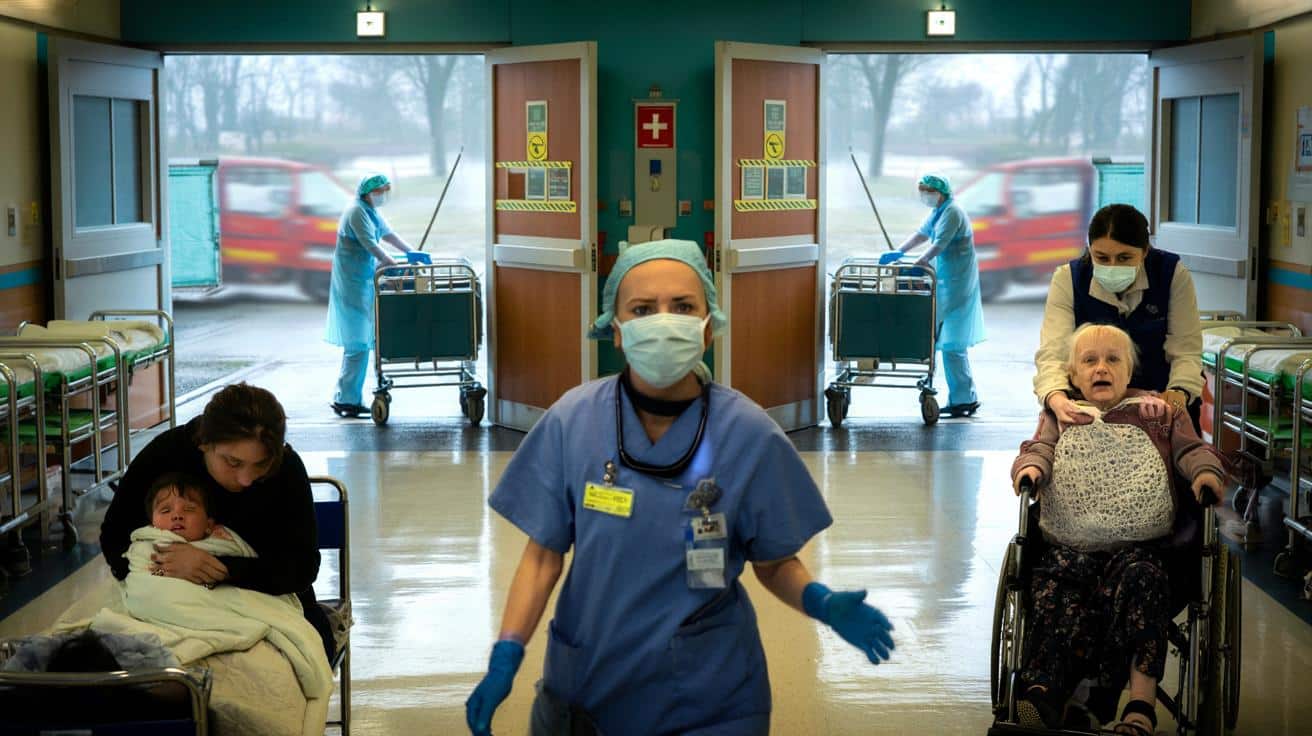
Inside, corridors busy with blankets and bleeping monitors, doors taped with “infection control” signs. Ten NHS hospital trusts have declared critical incidents, asking people to stay away unless it’s truly life-threatening. Flu and norovirus have arrived together. The wrong kind of duet.
The day starts with a queue before sunrise. Parents with flushed children, a carer steering a wheelchair with one hand and a sick bag with the other. A nurse passes, mask tugged under tired eyes, calling for a side room that doesn’t exist. You can hear the winter in the coughs, and see it in the disinfectant shine on the floors. A cleaner wipes the same handrail for the third time in five minutes. “We’ve never known it like this,” someone whispers. The air is warm and worried. The clock seems slow. Then the doors open again.
Critical incidents and the human picture behind the codes
When a trust declares a critical incident, it’s not just a line in a press note. It’s a signal that everything is full and every minute matters. Beds are scarce, staff are stretched, and non-urgent care gets pushed back. Flu is filling wards with breathless patients, while norovirus locks doors on entire bays. It’s a double hit that strips capacity from both ends at once.
In one A&E, a consultant counts thirteen patients waiting more than twelve hours for a bed. A nearby ward has four cubicles closed after a norovirus outbreak among frail elders. Across the region, GPs report calls spiking by a third, and NHS 111 waits stretch long enough for callers to hang up and try again. We’ve all had that moment where the child’s fever climbs at 2am and you wonder if it’s serious. Now multiply it by a city.
Flu drives admissions by inflaming the lungs and knocking down the frail, while norovirus blocks throughput by enforcing isolation rules. One virus swells the front door of the hospital; the other slams shut the exits. That’s why leaders are warning people to stay away if they can. It’s not indifference, it’s triage for the entire system. Beds are chess pieces, and every wrong move ripples across the board.
What to do right now: practical steps that actually help
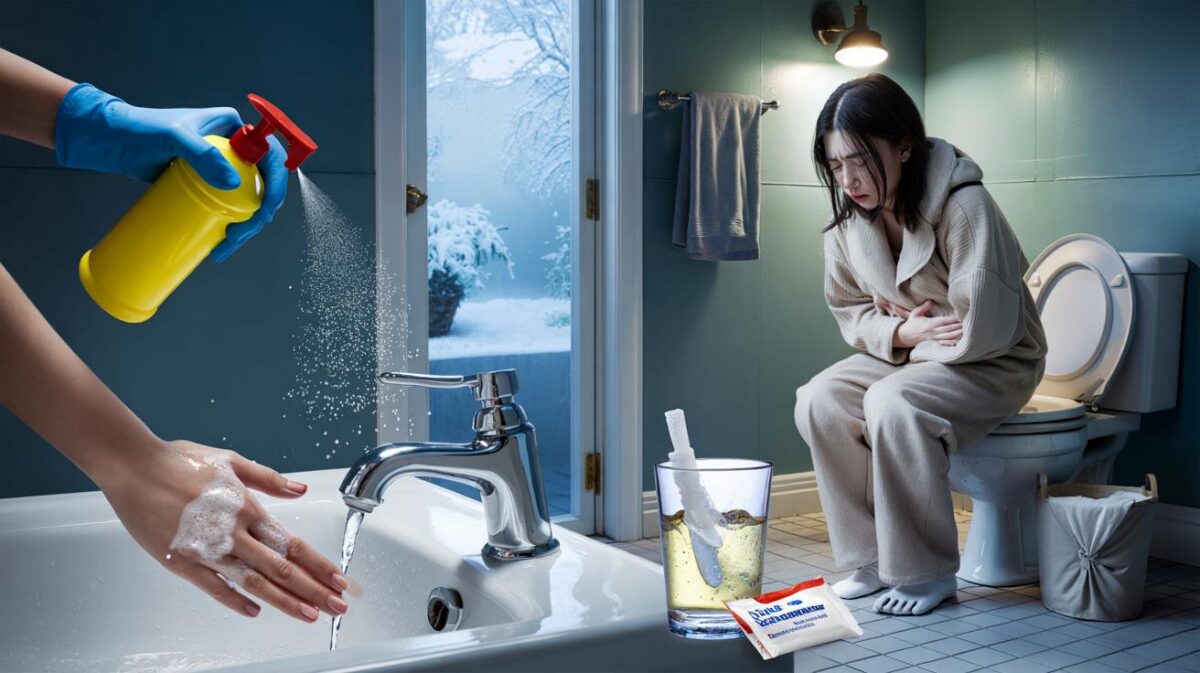
If someone has vomiting or diarrhoea, the safest place is home. Sip fluids often, tiny amounts, then build up with oral rehydration salts from a pharmacy. Keep them off school or work, and wait 48 hours after the last symptoms before mixing again. Soap and water beats hand gel for norovirus. Open a window, wash towels on a hot cycle, and clean touchpoints with bleach-based products.
With flu, think fever, aches, dry cough, sudden fatigue. Rest, hydrate, and take paracetamol or ibuprofen unless a clinician has told you not to. A pharmacist can help with symptom relief and red flags. If you’re in a risk group, call your GP or 111 for advice about antivirals within the first 48 hours of symptoms. Let’s be honest: nobody really does that every day. Still, early action can shorten the worst bit.
Small choices change the hospital picture in big ways. If it’s not life-threatening — no chest pain, no severe breathlessness, no signs of stroke — try NHS 111 online or by phone before heading to A&E. Keep visiting to a minimum if you feel sick, and wear a mask on wards if you’ve had a recent bug. One calm call beats three panicked visits.
“We’re not saying ‘don’t come’ when you need us,” says an A&E doctor in the Midlands. “We’re saying: use the right door for the right problem. That way, the resus bay is free when you need it.”
- Use NHS 111 for urgent, non-emergency care and clear next steps.
- See a community pharmacy for minor illness, hydration advice, and fever control.
- Stay home for 48 hours after norovirus symptoms stop; wash hands with soap and water.
- Call 999 for chest pain, severe breathlessness, stroke symptoms, heavy bleeding, seizures, or a very unwell child.
- If you’re at higher risk, ring your GP early for flu antivirals.
The uneasy middle: what this winter tells us
Every winter has a story. This one is about two familiar viruses peaking together and magnifying one another’s bite. Flu drives admissions up, norovirus drives bed closures up, and between them sits a workforce that’s already given everything by Tuesday. Staff sickness rises, rotas wobble, and the system creaks not because anyone failed, but because demand and reality collided.
There’s a lesson here beyond the headlines. Vaccination matters for flu, not only to protect yourself but to shrink the load on people you’ll never meet. The humble sink matters for norovirus, because soap and water cut through where gels can’t. **It’s the unglamorous stuff — washing hands, staying home a day longer, calling before you go — that unlocks capacity.** And it’s the one thing we can all actually do this week.
Another quiet truth: hospitals don’t want to raise alarm. They do it when they must. Critical incidents aren’t theatre; they’re a brake pedal you feel in your seat. **The ask is simple and a bit old-fashioned: look after yourself, look out for your neighbour, pick the right bit of the NHS for the job.** That way, the blue light lane stays clear for the worst day in someone’s life.
Winter will ebb. The graphs will bend, and the “no visiting” signs will come down. Before that, these next few weeks are about thresholds: who needs urgent care now, who needs timely advice, and who just needs a duvet, fluids, and time. Share the practical bits with the people you love. Post the 48-hour rule on the family chat. And maybe keep a pack of oral rehydration salts by the kettle. It’s not heroic, but it helps.
| Key point | Detail | Interest for the reader |
|---|---|---|
| Critical incidents mean “system under strain” | 10 hospital trusts are asking people to avoid A&E for non-urgent issues as flu and norovirus peak together | Understand why waits are longer and what to do instead |
| Norovirus needs soap and isolation | Stay home 48 hours after the last symptoms, wash with soap and water, and clean touchpoints | Cut transmission at home and avoid hospital outbreaks |
| Use the right NHS door | NHS 111, pharmacies, and GPs can manage many winter illnesses; 999/A&E for life-threatening symptoms only | Faster help for you, saved capacity for critical emergencies |
FAQ :
- How do I know if it’s flu or just a bad cold?Flu tends to hit fast with fever, deep aches, and sudden exhaustion, while a cold is milder with a runny nose and gradual onset.
- When should I go to A&E?Go for life-threatening symptoms: chest pain, severe breathlessness, signs of stroke, heavy bleeding, seizures, or a very unwell child.
- What actually helps with norovirus at home?Small, frequent sips of fluids, oral rehydration salts, rest, soap-and-water handwashing, and 48 hours at home after symptoms end.
- Can a pharmacist help with flu?Yes, for symptom relief, fever control, and spotting red flags. They can guide you to GP or A&E if needed.
- Does a flu jab still matter mid-season?Yes. It can reduce severity and lower risk of complications, which helps you and eases pressure on hospitals.



Clear explainer on why flu swells admissions while norovirus blocks beds. Thanks for the plain talk and the soap-not-gel reminder; that bit is so often missed.
If 10 trusts are in critical incident, why wasn’t surge capacity planned earlier? Do we have figures comparing flu admissions vs norovirus bed closures to see which lever actually breaks flow?